Insurance Coverage Explained
Liability vs Full Coverage: What Each Auto Insurance Type Actually Pays For
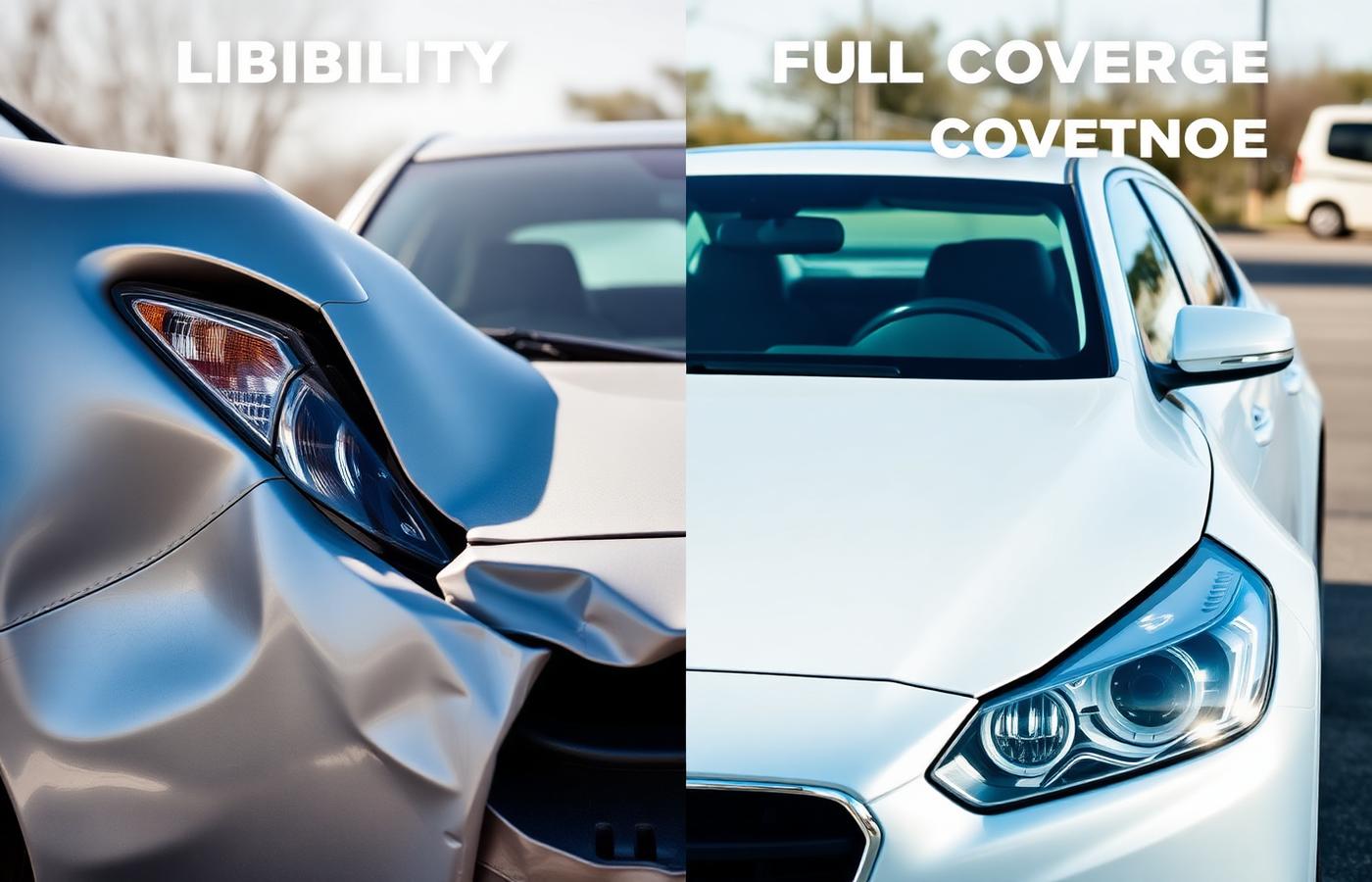
'Full coverage' is a marketing phrase, not a policy. Here is what liability, collision, and comprehensive really pay for.
By Eve Lambert · April 28, 2026 · 13 min read

"Full coverage" is a sales phrase, not a policy. Every U.S. auto policy is built from a stack of separate coverages. Knowing what each one pays for is the difference between thinking you are protected and actually being protected.
Liability coverage
Required in nearly every state. It pays for the other party's damages when you are at fault, split into:
- Bodily injury liability — their medical bills, lost wages, pain and suffering
- Property damage liability — their car, fence, mailbox, building
State minimums (e.g., 25/50/25) are dangerously low. A single ER visit can blow past a $25,000 limit before the ambulance bill arrives. Most experts recommend at least 100/300/100.
Collision coverage
Pays to repair your vehicle after a crash, regardless of fault. Typically required by lenders if you have a car loan or lease.
Comprehensive coverage
Covers non-collision damage: theft, vandalism, fire, hail, falling trees, animal strikes, glass damage. Often cheaper than people expect — sometimes under $10/month.
Uninsured / underinsured motorist (UM/UIM)
About 1 in 7 U.S. drivers is uninsured. UM/UIM pays your bills when the at-fault driver cannot. Skipping it is one of the most common — and most expensive — mistakes drivers make.
Medical payments / Personal injury protection (PIP)
Pays your immediate medical bills no matter who is at fault. Required in no-fault states like Florida, New York, and Michigan; optional but valuable elsewhere.
So what is "full coverage"?
Generally a shorthand for liability + collision + comprehensive. It does not automatically include UM/UIM, rental reimbursement, gap coverage, or roadside assistance. Read your declarations page line by line.
Quick decision guide
- Driving a car worth under $3,000 with no loan? Liability + UM/UIM may be enough.
- Have a loan or lease? Full coverage is required.
- Driving in a city with high theft or weather risk? Comprehensive is worth its low cost.
- Have significant assets? Raise liability to 250/500/250 and add an umbrella policy.
How to actually read your declarations page
Your declarations page (often called the "dec page") is the two- to four-page summary your insurer mails or emails every renewal. It is the only document that legally defines what you bought. Premium quotes, sales emails, and call-center promises do not override it. If a coverage is not listed on the dec page with a limit and a deductible, you do not have it — full stop.

The seven lines that actually matter
- Bodily injury liability limits — written as per-person / per-accident (e.g., 100/300). The first number caps any one claimant's recovery.
- Property damage liability limit — a single number (e.g., 100). On a freeway pile-up involving two newer SUVs, $50,000 disappears fast.
- Uninsured / underinsured motorist limits — should generally match your bodily injury limits. Lower UM than BI means you are better protected from yourself than from the uninsured driver next to you.
- Collision deductible — your out-of-pocket per claim. $500 is common; $1,000 trades a small monthly savings for a much larger surprise bill.
- Comprehensive deductible — often set separately. Glass is sometimes covered with $0 deductible in certain states.
- Medical payments / PIP limit — pays your medical bills regardless of fault. PIP rules vary wildly between no-fault and at-fault states.
- Rated drivers and rated vehicles — if a household driver is missing here, a claim involving them can be denied for misrepresentation.
Common surprises buried in the fine print
- Permissive use limits. Some policies drop liability limits to state minimums when someone outside the household drives your car with permission.
- Named-driver exclusions. A specific person — often a teen or a high-risk spouse — is excluded by name. If they drive and crash, your policy pays nothing.
- Stacking rules. In some states UM coverage stacks across multiple vehicles on the policy; in others it does not. The dec page rarely makes this obvious.
- Original-equipment vs aftermarket parts. Many policies default to "like kind and quality" parts, which can mean non-OEM body panels on repairs.
What "full coverage" almost never includes
Even drivers who pay top-dollar premiums are routinely shocked by what is not in their "full coverage" policy. These add-ons cost a few dollars per month and resolve some of the most common post-crash arguments.
Gap insurance
If you total a financed car in the first two or three years, your collision coverage pays the actual cash value (ACV) — which is often thousands less than your loan balance. Gap insurance covers the difference. Without it, you can finish a totaled-car claim still owing your lender money on a car you no longer own.
Rental reimbursement
Collision pays to repair your car; it does not pay for the rental you need for the three weeks it sits at the body shop. Rental reimbursement is usually $30–50 per day and costs a few dollars a month. Confirm both the daily limit and the per-claim cap.
OEM parts endorsement
Without this endorsement, insurers can specify aftermarket or recycled parts. For newer vehicles with advanced driver assistance systems (ADAS), aftermarket bumpers and windshields can throw off calibration. The endorsement is cheap; the recalibration disputes are not.
Diminished value
A repaired car is worth less than an undamaged one once the crash hits its vehicle history report. Most policies do not pay diminished value to their own insured (called "first-party diminished value"), but you can almost always claim it against the at-fault driver's insurer. You usually need an independent appraisal to prove the number.
Roadside and towing
Often bundled into "full coverage" marketing language, but frequently capped at very low per-event limits (e.g., $75 tow). Compare to a standalone auto club membership before assuming you are covered.
Comprehensive coverage in the real world
Comprehensive is the most under-appreciated line on the dec page. It is cheap precisely because the per-claim payouts are usually small — but the claims it covers tend to happen at the worst possible time.
What comprehensive typically pays for
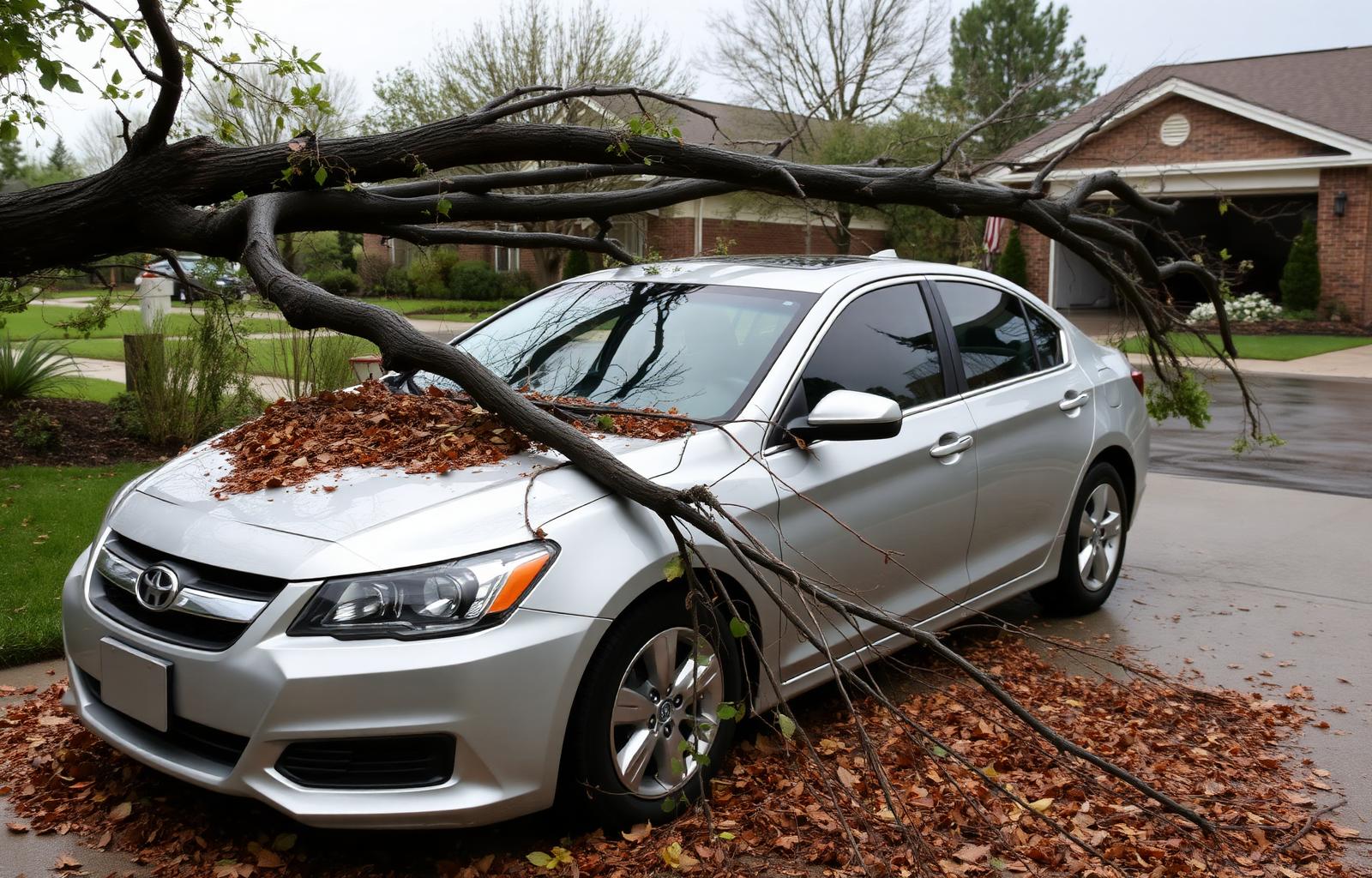
- Hail, wind, and severe-weather damage
- Falling objects (trees, branches, debris from another vehicle)
- Theft of the vehicle and certain attached components
- Vandalism, including keyed paint and broken windows
- Animal strikes — most famously, hitting a deer (a collision with an animal is a comprehensive claim in most states, not a collision claim)
- Fire, flood, and falling-object damage from natural disasters
- Glass repair and replacement, often with a separate (and sometimes $0) deductible
What comprehensive does not cover
- Mechanical breakdown or wear and tear
- Personal items stolen from inside the car (that is a homeowners or renters claim)
- Damage that occurs during a collision with another vehicle or fixed object
- Custom equipment beyond the standard policy cap (typically $1,000–1,500) unless separately scheduled
State minimums vs recommended limits
State-minimum policies exist for one purpose: to keep uninsured drivers off the road. They were never designed to protect you. Most state minimums were set decades ago and have not kept pace with medical costs, vehicle replacement values, or jury verdicts.
Why 25/50/25 is a trap for anyone with assets
A 25/50/25 policy caps your protection at $25,000 per injured person, $50,000 per accident, and $25,000 for property damage. A single overnight hospital stay with imaging and an ER visit can exceed $40,000. If the at-fault judgment exceeds your limit, the injured party can pursue your wages, savings, and home equity — depending on state exemptions. Higher limits are usually a few extra dollars per month, because the insurer is rarely going to pay them out.
Recommended starting points
- Renter, no major assets: 100/300/100 with matching UM/UIM.
- Homeowner or two-income household: 250/500/250 with matching UM/UIM.
- High net worth or business owner: 500/500/500 plus a $1–2 million umbrella policy.
If you are not sure whether you are protected after a serious crash, our guide on when to hire a car accident lawyer walks through the dollar thresholds where outside help usually pays for itself.
How insurers calculate your premium
Two drivers buying the exact same coverage stack at the same insurer can pay wildly different premiums. Knowing the inputs lets you target the ones you can actually move.
Inputs you cannot change quickly
- State and ZIP code (claim frequency by region drives a huge share of pricing)
- Age, marital status, and household structure
- Driving record over the past 3–5 years
- Vehicle make, model, trim, and safety ratings
Inputs you can move within weeks
- Credit-based insurance score in states that allow it — paying down revolving balances often moves this within one or two billing cycles.
- Annual mileage reported on the policy — many people overstate it.
- Deductible levels — moving from $500 to $1,000 can cut collision premium 10–15%.
- Bundling with renters or homeowners insurance.
- Telematics or usage-based programs that reward gentle braking and limited late-night driving.
For a full discount checklist, see our breakdown of 5 overlooked auto insurance discounts most drivers never claim.
How your coverage choices change after a claim
The moment you actually use the coverages on your dec page, the difference between the coverages you have and the coverages you wish you had becomes very real. A few patterns repeat in nearly every claim.
If you are at fault
Your liability limits cap what the insurer will pay the other party. Anything above those limits is your personal exposure. Your collision coverage handles your own car (minus deductible). For a step-by-step view of what happens next, read our auto insurance claim process explained.
If the other driver is at fault
Their liability covers you — until it runs out. Then your underinsured motorist coverage steps in. Without UIM, you are personally absorbing anything beyond their limit. Our guide on what to say (and not say) to an insurance adjuster covers the recorded-statement traps that most often suppress these payouts.
If the other driver is uninsured or flees
UM coverage is the entire ballgame. For hit-and-run specifics, see what to do after a hit-and-run. To understand how often these claims get denied and how to push back, read how to fight a denied car insurance claim.
Common mistakes that quietly leave you exposed
- Buying the cheapest quote without comparing coverages. "Cheapest" usually means lower limits, missing UM/UIM, or a much higher deductible.
- Letting auto-renewal carry forward old limits. Your limits from five years ago are almost certainly too low today.
- Dropping UM/UIM to save $8 a month. About 1 in 7 U.S. drivers is uninsured, and many more are underinsured.
- Assuming "full coverage" includes gap, rental, and roadside. It almost never does by default.
- Skipping the umbrella policy at higher incomes. A $1 million personal umbrella typically costs $150–300/year and sits on top of all your liability.
- Excluding a household driver to lower the premium. If that driver ever takes the wheel, you are uninsured for that trip.
Key takeaways
- "Full coverage" is a marketing phrase, not a policy. Your declarations page is the only document that defines what you actually bought.
- Liability protects the other party; collision and comprehensive protect your vehicle. UM/UIM protects you from the other driver's missing or thin coverage.
- State minimums were never designed to protect you. 100/300/100 with matching UM/UIM is a sensible floor for most households.
- Comprehensive is the cheapest line on most policies and covers some of the most likely real-world events: hail, theft, glass, animal strikes.
- Gap, rental reimbursement, OEM parts, and diminished value are almost never bundled into "full coverage" by default — add them on purpose.
- A repaired car is worth less than an undamaged one. Diminished value claims against the at-fault insurer are real money, but you have to ask.
- Deductibles, credit-based insurance scores, mileage, bundling, and telematics are the levers you can usually move within weeks.
- If you have meaningful assets, an umbrella policy is one of the highest-ROI insurance products you can buy.
- Review your declarations page at every renewal. Limits set five years ago are probably too low for today's medical costs and vehicle values.
- If a serious claim is on the table, our guides on the claim process, talking to the adjuster, and when to hire a lawyer are the next things to read.
Frequently asked questions
Is full coverage required by law?+
No. Only liability is required by state law. Collision and comprehensive are required by lenders if your vehicle is financed or leased.
Should I drop collision when my car gets old?+
A common rule of thumb: when your annual collision + comprehensive premium exceeds 10% of your car's market value, dropping collision is usually rational.
Does full coverage pay for a rental car while mine is being repaired?+
Only if you have rental reimbursement on the policy. It is a separate add-on, typically $30–50 per day, and is not automatically included in 'full coverage.'
What is gap insurance and do I need it?+
Gap insurance pays the difference between your car's actual cash value and your loan balance if it is totaled. If you financed a new vehicle with a small down payment, you almost certainly need it for the first 2–3 years.
Continue reading
- 5 Overlooked Auto Insurance Discounts →
- How the Auto Insurance Claim Process Works →
- What to Do After a Car Accident: Step-by-Step →
- What to Say (and Not Say) to an Insurance Adjuster →
- How to Fight a Denied Car Insurance Claim →
- When to Hire a Car Accident Lawyer →
- Car Accident Lawyer Cost & Contingency Fees →
- Hit and Run Accident: What to Do →
Sources
Have you ever filed a car insurance claim?
Share your experience or send us a tip — our reporters read every email and use anonymized stories to shape future coverage.
Send us your storyMore from Crash & Cover
Full Coverage vs Liability Insurance — Which One Should You Choose?
Full coverage vs liability insurance is one of the most financially significant decisions you make as a driver. Here is what each really covers and how to choose.
Daniel Reyes · May 17, 2026 · 14 min

Car Insurance Deductibles Explained — How to Choose the Right Amount
Your deductible is one of the most important decisions in your car insurance policy. Learn how deductibles work, how they affect your premium, and how to choose the right amount for your situation.
Daniel Reyes · May 16, 2026 · 10 min
Uninsured Motorist Coverage Explained — What Happens When They Have No Insurance
Roughly 1 in 8 US drivers has no insurance. Here is exactly how uninsured motorist coverage protects you, what it pays for, and how to file a claim when the at-fault driver has no policy.
Daniel Reyes · May 14, 2026 · 11 min