Insurance Coverage Explained
Car Insurance Deductibles Explained — How to Choose the Right Amount
Your deductible is one of the most important decisions in your car insurance policy. Learn how deductibles work, how they affect your premium, and how to choose the right amount for your situation.
By Daniel Reyes · May 16, 2026 · 10 min read

When you purchase car insurance, one of the most important decisions you make is choosing your deductible. Yet most drivers pick a number without fully understanding what it means — or how it affects both their monthly premium and their out-of-pocket costs after an accident.
A deductible is the amount you agree to pay out of your own pocket before your insurance coverage kicks in after a claim. Choose too high a deductible and you may find yourself facing a large unexpected bill after an accident. Choose too low a deductible and you may be paying significantly more than necessary in monthly premiums for coverage you rarely use.
Getting this decision right can save you hundreds — or even thousands — of dollars over the life of your policy. This guide explains exactly how car insurance deductibles work, how they interact with your premium, and the key factors to consider when choosing the right deductible amount for your specific situation.
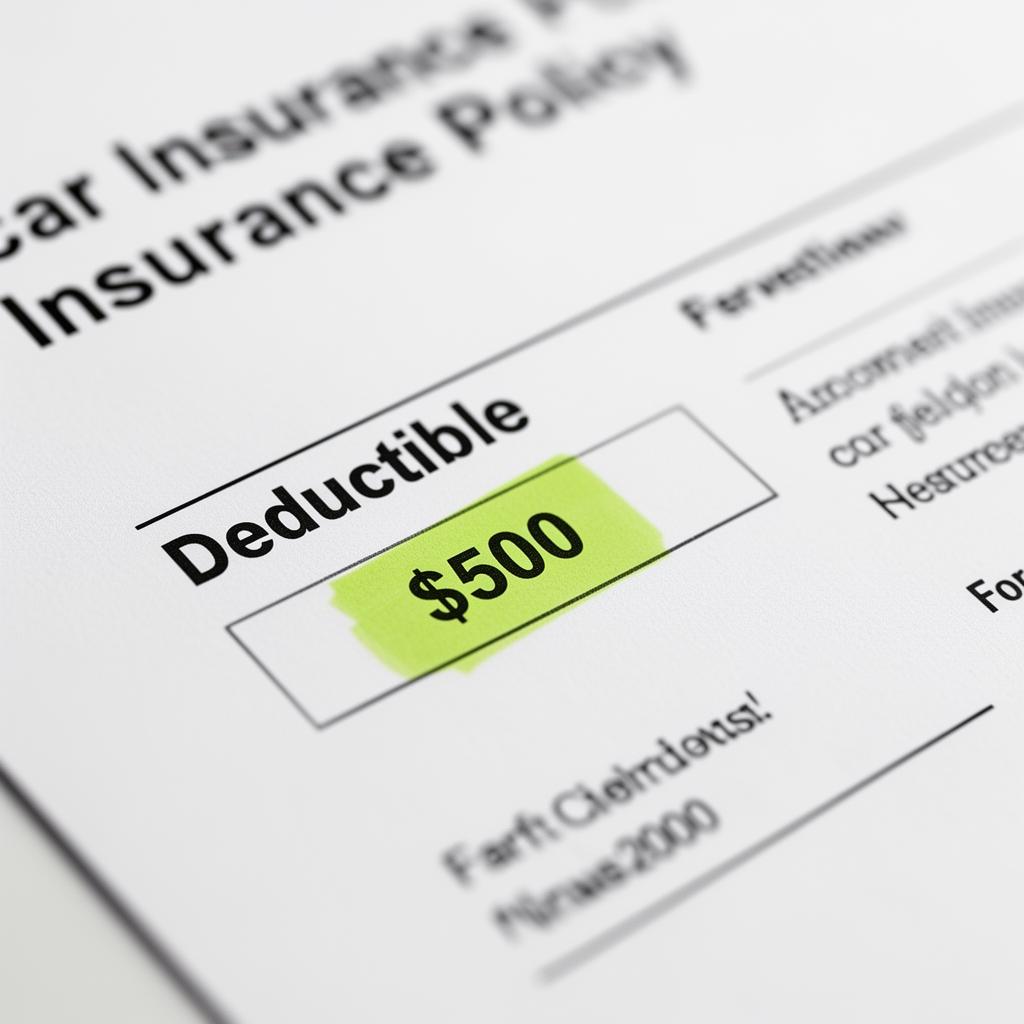
What Is a Car Insurance Deductible?
A car insurance deductible is the fixed dollar amount you are responsible for paying toward a covered claim before your insurance company pays the remainder.
Here is a simple example of how it works:
- Your vehicle sustains $5,000 in damage after an accident
- Your collision coverage deductible is $1,000
- You pay the first $1,000
- Your insurance company pays the remaining $4,000
The deductible applies each time you file a claim, not once per year like health insurance deductibles. Every separate claim requires you to meet your deductible again before your insurer pays.
Which Types of Car Insurance Have Deductibles?
Not all types of car insurance coverage involve deductibles. Understanding which coverages require a deductible and which do not helps you make smarter coverage decisions.
Coverages That Typically Have Deductibles
Collision Coverage — Collision coverage pays for damage to your vehicle resulting from a collision with another vehicle or object. This coverage almost always comes with a deductible that you choose when purchasing your policy.
Comprehensive Coverage — Comprehensive coverage pays for damage to your vehicle from non-collision events such as theft, vandalism, fire, flooding, hail, fallen trees, and animal strikes. This coverage also typically comes with a deductible, though it can sometimes differ from your collision deductible.
Uninsured Motorist Property Damage — In some states, uninsured motorist property damage coverage comes with a small deductible, often ranging from $100 to $300.
Coverages That Typically Do Not Have Deductibles
Liability Coverage — Liability coverage pays for damage and injuries you cause to others. Since this coverage pays third parties rather than you directly, it does not involve a deductible.
Medical Payments Coverage and Personal Injury Protection — These coverages typically pay your medical expenses without requiring a deductible, though some policies may include a small one.
Roadside Assistance — Roadside assistance coverage generally does not involve a deductible.
How Does Your Deductible Affect Your Premium?
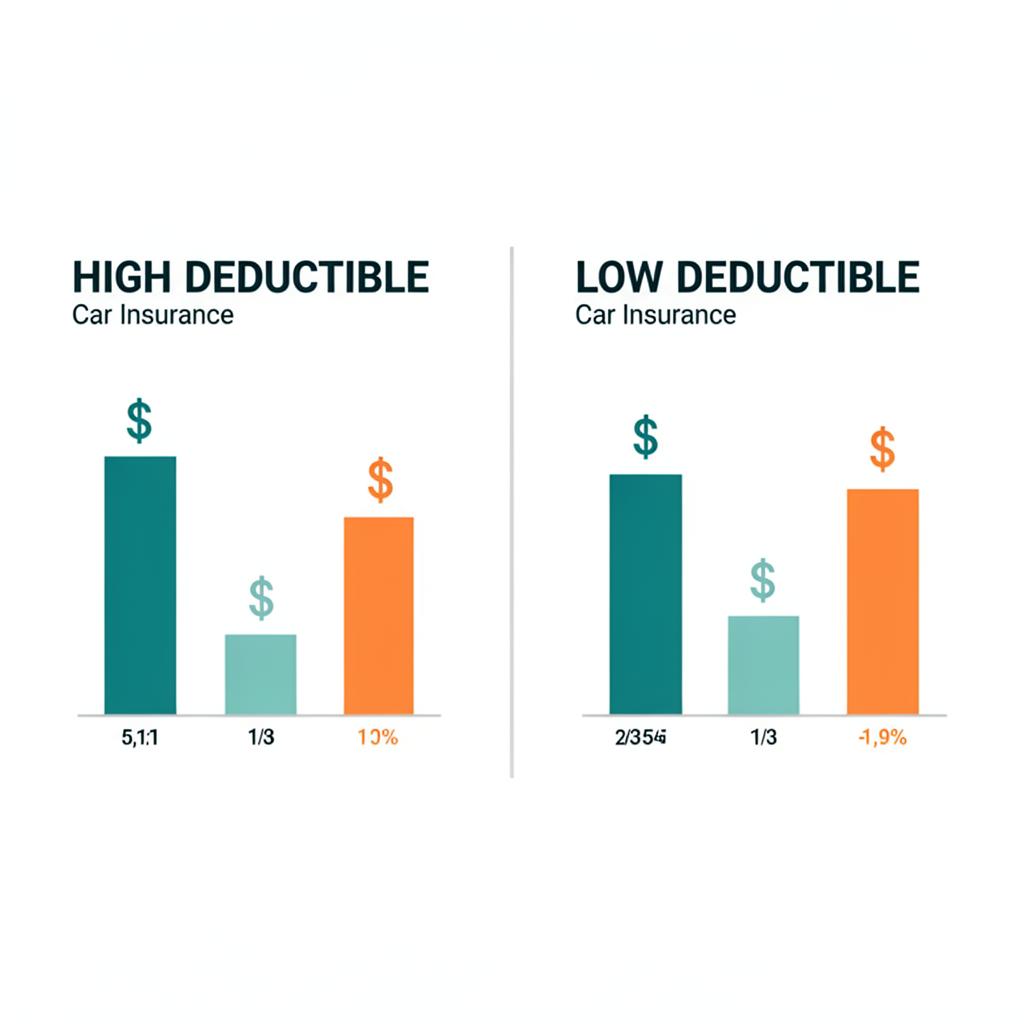
The relationship between your deductible and your insurance premium is one of the most important concepts in car insurance. The two move in opposite directions — when one goes up, the other goes down.
Higher Deductible = Lower Premium — Choosing a higher deductible means you are agreeing to take on more financial risk yourself. In exchange, your insurance company charges you a lower monthly or annual premium because their potential payout on any claim is reduced.
Lower Deductible = Higher Premium — Choosing a lower deductible means your insurance company takes on more financial risk. They compensate for this by charging you a higher premium.
How Much Can You Save?
The premium savings from raising your deductible vary by insurer, location, vehicle, and driving history. However, as a general guideline:
- Raising your deductible from $500 to $1,000 typically saves 10% to 20% on your collision and comprehensive premiums
- Raising your deductible from $250 to $1,000 can save 25% to 40% on those same coverages
For example, if your collision and comprehensive premiums total $1,200 per year and you raise your deductible from $500 to $1,000, you might save $180 to $240 per year. Over five years with no claims, that is $900 to $1,200 in savings — more than enough to cover the additional $500 deductible if you do need to file a claim.
Common Deductible Amounts
Car insurance deductibles typically range from $0 to $2,500, with the most common options being:
$0 Deductible — A zero deductible means you pay nothing out of pocket when you file a claim. This option is available from some insurers but comes with significantly higher premiums. It is generally only cost-effective for drivers who file claims frequently or own very high-value vehicles.
$250 Deductible — A low deductible that minimizes your out-of-pocket exposure after a claim but results in higher monthly premiums. A good option if you have limited emergency savings.
$500 Deductible — The most common deductible amount chosen by US drivers. It represents a middle ground between premium savings and out-of-pocket risk.
$1,000 Deductible — A popular choice for drivers with solid emergency savings who want to reduce their premiums. The premium savings typically justify the higher deductible for drivers who rarely file claims.
$1,500 to $2,500 Deductible — High deductibles that offer the most significant premium savings but require you to have substantial savings available to cover potential out-of-pocket costs after a claim.
How to Choose the Right Deductible Amount
Choosing the right deductible is a personal financial decision that depends on several key factors. Work through these considerations carefully before deciding.
Factor 1 — Your Emergency Savings
The most important factor is how much money you have readily available in savings. Your deductible is the amount you will need to pay immediately after filing a claim — often within days of the accident.
If you choose a $1,000 deductible but only have $300 in savings, you could find yourself unable to pay for repairs after an accident. Choose a deductible that you could comfortably pay out of pocket today without financial hardship.
Factor 2 — Your Vehicle's Value
High deductibles make less sense for lower-value vehicles. If your car is worth $4,000 and you carry a $2,000 deductible, your insurance company would only pay $2,000 in a total loss — barely worth the cost of maintaining the coverage.
As a general rule, if your vehicle is worth less than ten times your annual collision and comprehensive premium, consider dropping those coverages altogether rather than paying for them with a high deductible.
Factor 3 — Your Driving History and Risk Profile
Honest self-assessment of your driving habits and risk matters here. If you have a history of accidents or live in a high-traffic urban area with a higher probability of accidents, a lower deductible provides more protection. If you have a clean driving record and drive primarily in low-risk conditions, a higher deductible may be a smart financial choice.
Factor 4 — How Often You Plan to File Claims
Many financial advisors recommend not filing insurance claims for minor damage that only slightly exceeds your deductible. Filing small claims can raise your premium significantly over time, potentially costing more than the claim was worth.
If you tend to handle minor repairs out of pocket and only use insurance for significant damage, a higher deductible aligns with that approach and saves you money on premiums.
Factor 5 — The Break-Even Calculation
One of the most useful tools for choosing a deductible is the break-even calculation. This tells you how long it takes for the premium savings from a higher deductible to offset the additional out-of-pocket cost.
Here is how to calculate it:
- Difference in deductible amounts: $1,000 - $500 = $500
- Annual premium savings from higher deductible: $200
- Break-even point: $500 ÷ $200 = 2.5 years
If you go more than 2.5 years without filing a claim, the higher deductible saves you money. If you file a claim within 2.5 years, the lower deductible would have been the better choice.

Should You Have the Same Deductible for Collision and Comprehensive?
Many drivers automatically set the same deductible for both collision and comprehensive coverage without considering whether different amounts might make more sense.
Comprehensive claims tend to be more frequent than collision claims in many parts of the country — hail storms, flooding, deer strikes, and theft can happen even to the most careful drivers. For this reason, some drivers choose a lower comprehensive deductible and a higher collision deductible.
Ask your insurance agent to quote several combinations of collision and comprehensive deductibles so you can compare the premium differences and choose the combination that works best for your situation.
What Happens if You Cannot Afford Your Deductible After an Accident?
This is a situation many drivers find themselves in — particularly those who chose a higher deductible to save on premiums without ensuring they had the savings to back it up.
If you cannot immediately pay your deductible after an accident, here are your options:
Negotiate With the Repair Shop — Some repair shops will allow you to pay your deductible in installments rather than all at once. It is worth asking directly.
Use a Personal Loan or Credit Card — While not ideal, using a personal loan or credit card to cover your deductible temporarily allows you to get your vehicle repaired while you repay the amount over time.
Ask Your Insurance Company About Deductible Financing — Some insurance companies offer programs that allow you to finance your deductible and repay it as part of your ongoing premium payments.
Reduce Your Deductible Going Forward — After experiencing the difficulty of covering a high deductible, contact your insurance company to lower your deductible on your next policy renewal. Your premium will increase, but you will have the protection of a more manageable out-of-pocket amount.
Key Takeaways
- A deductible is the amount you pay out of pocket before insurance covers the rest of a claim
- Higher deductibles mean lower premiums and higher out-of-pocket risk
- Lower deductibles mean higher premiums and lower out-of-pocket risk
- The most common deductible amount chosen by US drivers is $500
- Never choose a deductible higher than what you could comfortably pay from savings today
- Use the break-even calculation to determine whether a higher deductible makes financial sense
- Consider setting different deductible amounts for collision and comprehensive coverage
- Vehicle value matters — high deductibles make less sense for lower-value vehicles

Conclusion
Your car insurance deductible is one of the most consequential decisions in your entire insurance policy — yet most drivers give it less thought than they give to choosing a streaming service.
The right deductible is not the highest one you can technically afford, nor the lowest one available. It is the amount that balances your monthly premium savings against the realistic out-of-pocket cost you could handle comfortably after an accident.
Take time to run the numbers, assess your savings, consider your driving habits, and use the break-even calculation before making your decision. A few minutes of careful thought about your deductible today could save you significant financial stress the next time you need to file a claim.
Read these related guides on how to fight a denied car insurance claim, how much your car accident settlement could be worth, and uninsured motorist coverage explained. Have a question about your deductible? Send us a tip — we read every email.
Frequently asked questions
Does my deductible apply if the other driver was at fault?+
If the other driver was clearly at fault and their insurance accepts liability, you typically file a claim against their liability insurance rather than your own collision coverage — meaning no deductible applies. However, if there is a dispute about fault or the other driver is uninsured, you may need to file under your own coverage and pay your deductible while the fault determination is resolved.
Can I change my deductible after I buy my policy?+
Yes. You can typically request a deductible change with your insurance company at any time. The change usually takes effect at your next policy renewal or immediately depending on your insurer's policies. Keep in mind that changing your deductible mid-policy may affect your premium calculation.
Is a $500 or $1,000 deductible better?+
It depends entirely on your financial situation. If you have at least $1,000 readily available in savings and a clean driving record, the $1,000 deductible typically saves you enough in premiums to justify the higher out-of-pocket risk. If you have limited savings or a history of accidents, the $500 deductible provides more financial protection.
Does filing a claim always require paying a deductible?+
No. Deductibles only apply to certain coverages like collision and comprehensive. If another driver is at fault and you file against their liability insurance, you pay no deductible. Some states also have special provisions for glass damage that allow windshield repairs with no deductible.
Continue reading
Sources
Have you ever filed a car insurance claim?
Share your experience or send us a tip — our reporters read every email and use anonymized stories to shape future coverage.
Send us your storyMore from Crash & Cover
Full Coverage vs Liability Insurance — Which One Should You Choose?
Full coverage vs liability insurance is one of the most financially significant decisions you make as a driver. Here is what each really covers and how to choose.
Daniel Reyes · May 17, 2026 · 14 min

Uninsured Motorist Coverage Explained — What Happens When They Have No Insurance
Roughly 1 in 8 US drivers has no insurance. Here is exactly how uninsured motorist coverage protects you, what it pays for, and how to file a claim when the at-fault driver has no policy.
Daniel Reyes · May 14, 2026 · 11 min

Liability vs Full Coverage: What Each Auto Insurance Type Actually Pays For
'Full coverage' is a marketing phrase, not a policy. Here is what liability, collision, and comprehensive really pay for.
Eve Lambert · Apr 28, 2026 · 13 min