Car Accident Claims
What To Do After a Car Accident: A 10-Step Checklist That Protects Your Insurance Claim
The first 30 minutes after a crash decide how much your car accident insurance claim is worth. Follow this 10-step checklist to protect your money and your rights.
By Maya Doroshenko · May 8, 2026 · 13 min read
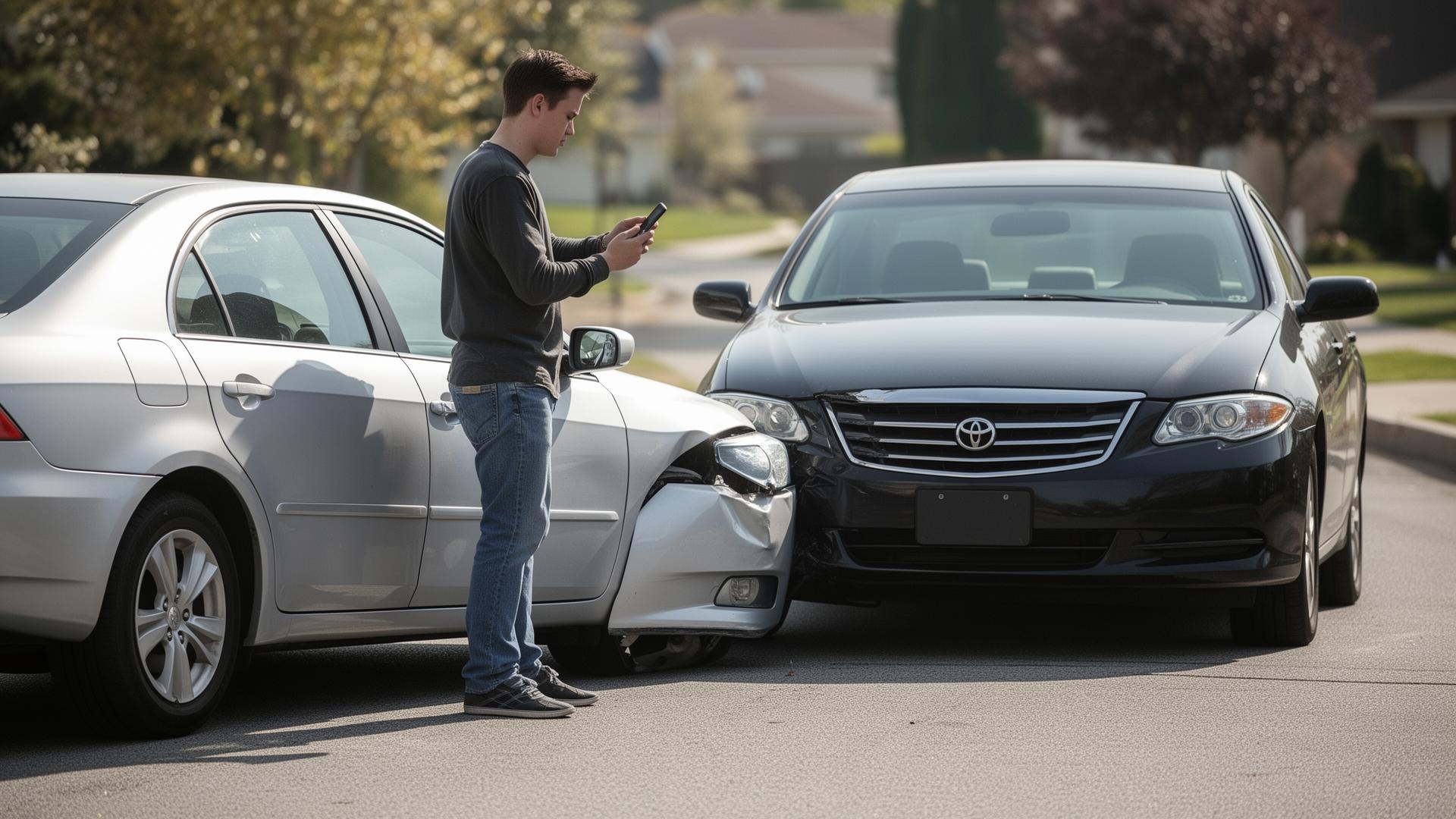
The first 30 minutes after a crash decide how much your car accident insurance claim is worth. Stay too calm and you forget evidence. Panic and you say something that costs you thousands. Insurance adjusters know it — that is exactly why they call you so quickly.
This checklist is built from interviews with claims adjusters, plaintiff attorneys, and state DMV guidance. Save it to your phone now. You will not have time to read it later.
If you are reading this on the side of the road, skip straight to step 1 and work down. If you are reading it before anything has happened, that is even better — the drivers who recover the most are almost always the ones who knew the playbook before the crash.
1. Stop, breathe, and check for injuries
Even a low-speed fender bender activates a stress response that narrows your judgment. Take three slow breaths before you do anything else, then check yourself, your passengers, and the other driver. If anyone is hurt, call 911 immediately — paramedics on scene also create a medical record that strengthens an injury claim later.
What "checking for injuries" actually means
Adrenaline hides pain. Run a quick mental scan: neck, lower back, knees, wrists, headache, dizziness, ringing in the ears. Ask passengers the same questions out loud — children especially will say "I'm fine" because that is what they think you want to hear. If anything feels off, lean toward calling EMS.
2. Move to safety, but do not flee the scene
If your car is drivable and the accident is minor, move it to the shoulder or a nearby parking lot. Leaving a scene without exchanging information is a crime in every U.S. state, even when you believe the crash was not your fault.
When to leave the cars where they are
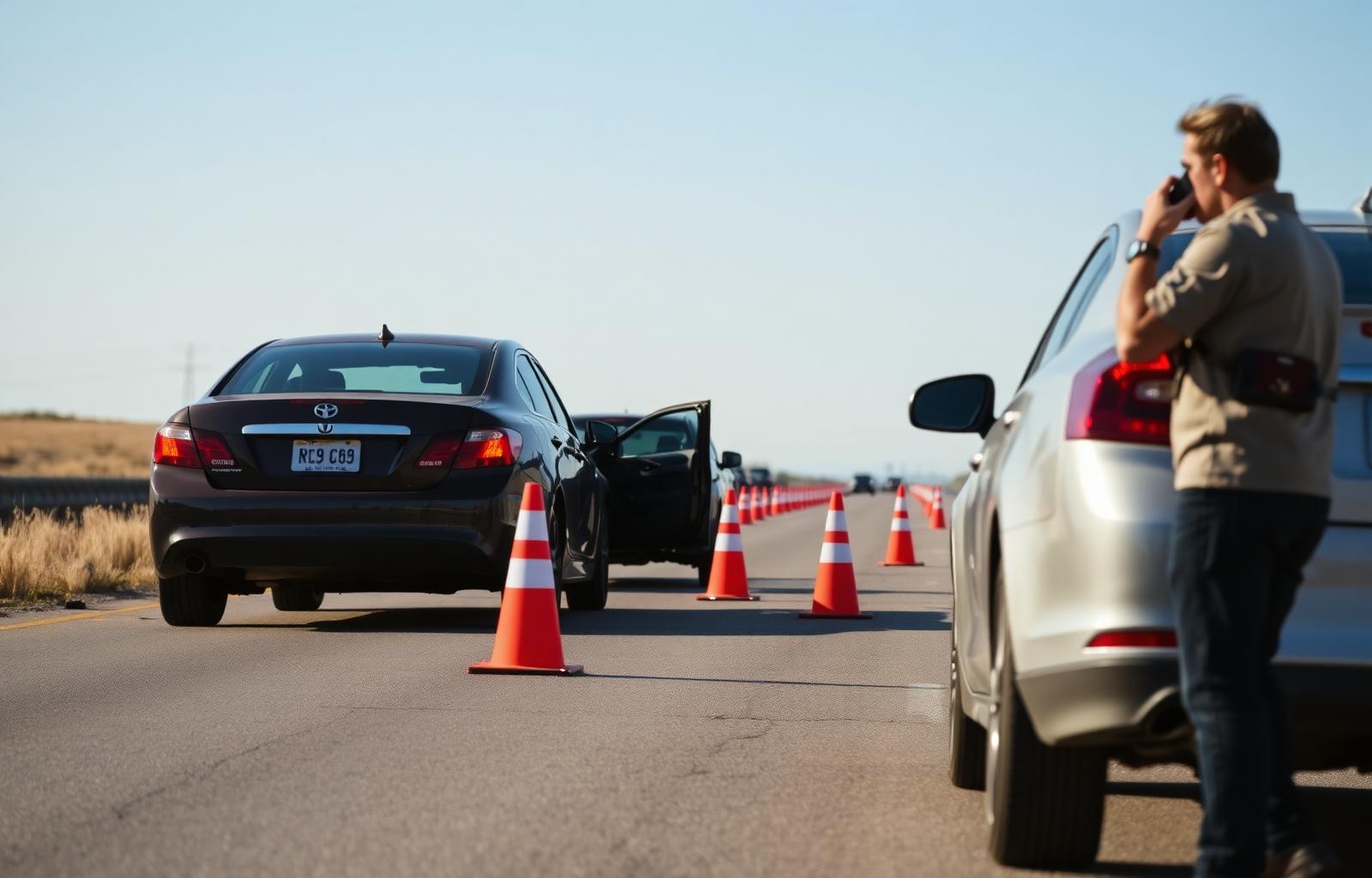
If anyone is injured, if a vehicle is leaking fuel, or if the crash involves a commercial truck or government vehicle, leave the cars exactly where they came to rest and turn on your hazards. Mark the lane with road flares or cones from your trunk kit if traffic is heavy. Police use final-rest positions to reconstruct fault.
3. Call the police — every time
Insurers weigh police reports heavily. In most states an officer is required for any crash with injuries or visible damage above a dollar threshold (often $500–$2,500). Even when an officer says a report is "not necessary," request one. A neutral, time-stamped record is the single most useful document in an auto insurance claim process.
What if the police won't come?
Some cities will not dispatch officers to minor crashes with no injuries. If that happens, drive to the nearest police station and file a "counter report" the same day. Save the case number. You can also file a state DMV crash report (Form SR-1 in California, MV-104 in New York, etc.) within the deadline shown on your state's DMV site. A self-filed report is not as strong as an officer's report, but it is dramatically better than nothing.
4. Photograph everything
- Wide shots of both vehicles and the surrounding intersection
- Close-ups of damage, license plates, and VIN plates
- Skid marks, debris, traffic signals, and weather conditions
- The other driver's insurance card and driver's license
- Any nearby security cameras (storefronts, ATMs, doorbell cams) — note the address
Your phone's GPS-tagged metadata becomes evidence. Take more photos than you think you need.

The 30-second video everyone forgets
After the stills, shoot one slow 360° video walking around both cars while narrating what you see: "Front-end damage to my hood, left headlight cracked, other driver's right rear quarter panel dented." That single clip captures lighting, road conditions, traffic signals, and your own contemporaneous account in one file — the kind of evidence that becomes very hard to dispute weeks later.
5. Exchange information — but only the basics
Swap names, phone numbers, addresses, license numbers, plate numbers, insurer names, and policy numbers. Do not discuss fault, apologize, or speculate about injuries. A casual "I'm sorry" can be quoted later as an admission.
Phrases that cost drivers thousands
- "I didn't see you" — sounds like a fault admission.
- "I'm sorry" — even as politeness, it can be quoted as an admission.
- "I'm fine, no injuries" — locks you into a position before adrenaline wears off.
- "Let's just handle this without insurance" — see our $25,000 fender bender case study for why this almost never works.
When the other driver's insurer calls in the next 24 hours, your safest answer is the same answer every time: "I will only confirm the date, location, and that I was involved. I am not giving a recorded statement today." For the full script, see what to say to an insurance adjuster.
6. Find independent witnesses
Pedestrians, store clerks, or other drivers can break a "he said, she said" tie. A 30-second voice memo of their account on your phone is more reliable than your memory three weeks later.
How to ask without making them uncomfortable
Most people are willing to help if you ask quickly and respectfully: "I'm sorry, do you have 30 seconds? I just need your name and number in case my insurance asks what you saw." Almost nobody says no. Witnesses who feel respected at the scene almost always pick up the phone three weeks later.
7. Notify your insurer within 24 hours
Almost every auto policy contains a "prompt notice" clause. Waiting can give your insurer grounds to deny coverage even when you were not at fault. Report the basic facts only — leave fault analysis to the adjuster.
What to say on the first call
Stick to the five Ws: who (you and the other driver), what (date and brief description), where (intersection or mile marker), when (time), and why minimal (weather, road conditions). Avoid speculation. If asked whether you were injured, the honest answer is usually "I am being evaluated — I will update you." Anything firmer locks you in too early.
8. Get checked by a doctor — even if you "feel fine"
Adrenaline masks soft-tissue injuries for 24–72 hours. Whiplash, concussions, and back strain often surface days later. A same-day medical visit links the injury to the crash; a delayed visit gives the other insurer ammunition to argue your injury came from something else.
Which doctor to see first
Urgent care is usually faster and cheaper than the ER for crashes without obvious trauma. Tell the intake nurse it is a motor vehicle accident — that single phrase ensures the visit is coded as MVA, which is what every insurance adjuster searches for in your medical record later. If symptoms escalate, follow up with your primary care doctor within a week.
9. Keep a claim journal
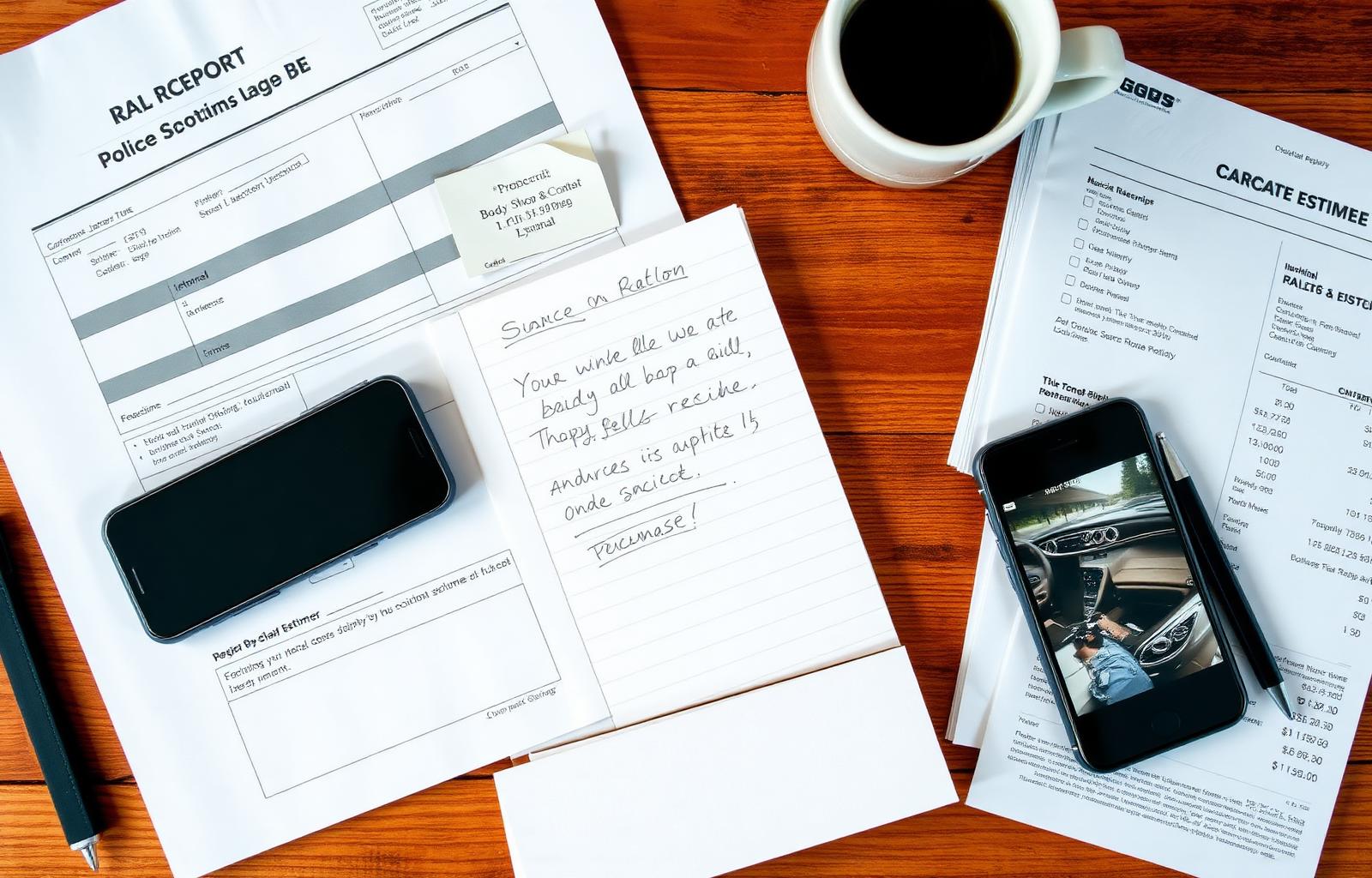
Open a notes file with the date and a one-line summary every time anything happens — calls, emails, body shop estimates, doctor visits, missed work hours. The journal becomes your contemporaneous record if the claim escalates to arbitration or court.
What to log every single day
- Every phone call: date, time, name and title of the person, claim/reference number, what was said.
- Every email or letter: keep a PDF copy in one folder, named by date.
- Every medical visit: provider, diagnosis, prescribed treatment, follow-up date.
- Every missed work hour and any side income lost.
- Every out-of-pocket expense: rental car, prescriptions, parking at appointments.
10. Do not accept the first offer
The first settlement check from the at-fault driver's insurer is almost always lower than what your claim is worth. According to the Insurance Information Institute, the average bodily injury claim in the U.S. is now over $24,000 — far above the early "courtesy" offers most drivers see first.
How to know if your offer is reasonable
Add up your actual losses: medical bills (current and projected), property damage, lost wages, and a multiplier of 1.5x–5x of medical bills for pain and suffering depending on injury severity. Compare against the offer. If you are within 70%–80%, it may be fair. If you are under 50%, the insurer is testing you. Our breakdown of how much money a car accident settlement is really worth walks through the math.
When a lawyer pays for themselves
If there are injuries, a denied claim, or any dispute over fault, talk to a personal injury attorney before signing anything. Most work on contingency — they only get paid if you do. See how contingency fees actually work and when to hire a car accident lawyer.
Common mistakes that quietly destroy claims
Posting on social media
Adjusters and defense lawyers actively scan public profiles. A single photo of you smiling at a wedding three weeks after the crash can be used to argue your injuries are exaggerated. Lock your accounts down for the duration of the claim, and do not post about the accident at all.
Giving a recorded statement to the other insurer
You are not required to. Decline politely. Anything you say will be transcribed, parsed for inconsistencies, and used to anchor a low offer.
Cashing the first check
Most early checks come with language that says cashing it releases all future claims. If you cash it and a surgery shows up two months later, you have no recourse. Read every word above the signature line.
Letting the body shop talk you into "OEM only" or "aftermarket only" without checking your policy
Your policy almost certainly specifies what kind of parts the insurer will pay for. If you authorize work beyond that, you eat the difference. Ask the shop to confirm coverage with the adjuster in writing before any work starts.
Special situations
Hit-and-run
Call 911 immediately. Write down anything you remember about the other vehicle: color, make, partial plate, direction it fled. Check nearby surveillance. File the police report in person, not online — a uniformed officer's report carries more weight. Your own uninsured motorist coverage usually pays. Start with our UM coverage explainer.
The other driver has no insurance
Same playbook. Document like usual, but lean on your own uninsured/underinsured motorist (UM/UIM) coverage. If you do not have UM/UIM, this is the single coverage to add at your next renewal — it is one of the cheapest dollars in a typical policy and one of the most useful.
You were hit while parked
If there is no note, treat it as a hit-and-run. Photograph paint transfer, look for nearby cameras within an hour (most storefronts overwrite footage within 14–30 days), and notify your insurer that day. Comprehensive or collision coverage usually handles repairs, minus your deductible.
You are partially at fault
You can still recover money in most states. The exact rules depend on whether your state uses pure comparative negligence, modified comparative negligence (50% or 51% bar), or contributory negligence (a handful of states). Do not assume you have no case — talk to an attorney.
Key Takeaways
- The first 30 minutes are worth more than the next 30 days — document everything before you drive away.
- Always call the police, even when the other driver insists you do not need to.
- Photograph the scene, the cars, the plates, the license, the insurance card, and nearby cameras.
- Never apologize, never admit fault, never give a recorded statement to the other insurer.
- See a doctor within 72 hours and tell intake it is a motor vehicle accident.
- Keep a dated claim journal from day one — it wins disputed claims.
- The first settlement offer is the lowest offer. Always negotiate, and bring in a contingency-fee attorney when injuries are involved.
- If a claim is denied, you have options. Read how to fight a denied car insurance claim before you accept "no."
Quick Summary
- Call the police and request a report — always.
- Photograph everything; never apologize.
- See a doctor within 72 hours, even if you feel fine.
- Notify your insurer within 24 hours.
- Negotiate. The first offer is the lowest offer.
Real-world impact on your premiums
An at-fault accident raises U.S. premiums an average of 49% over three years, according to industry data. A not-at-fault accident, well-documented, raises them less than 5% in most states — and in California, New York, and Oklahoma, it cannot raise them at all. Following this checklist is not paperwork; it is the difference between a clean record and a multi-thousand-dollar surcharge.
Frequently asked questions
Do I have to call the police for a minor fender bender?+
In most states yes, especially if there is any visible damage or possibility of injury. Even where it is optional, a police report dramatically strengthens your car accident insurance claim and is free to obtain.
Should I tell the other driver's insurance company what happened?+
No. You are required to talk to your own insurer, but you are not required to give a recorded statement to the other driver's insurance company. Politely decline and let your adjuster or attorney handle it.
How long do I have to file a claim?+
Most insurers require notice within 24 to 72 hours. The legal statute of limitations to sue varies by state, typically 2 to 3 years for injury claims, but waiting that long almost always weakens your case.
Continue reading
- How the Auto Insurance Claim Process Actually Works →
- Liability vs Full Coverage: What You Actually Need →
- When to Hire a Lawyer After a Car Accident →
- What To Say to an Insurance Adjuster →
- How To Fight a Denied Car Insurance Claim →
- Car Accident Lawyer Cost & Contingency Fees →
- How Much Is a Car Accident Settlement Worth? →
- Uninsured Motorist Coverage Explained →
- Lessons From a $25,000 Fender Bender →
Sources
Have you ever filed a car insurance claim?
Share your experience or send us a tip — our reporters read every email and use anonymized stories to shape future coverage.
Send us your storyMore from Crash & Cover

How to Negotiate an Insurance Settlement After a Car Accident — Step by Step Guide
The insurance company's first offer is almost never their best offer. Here is the step-by-step playbook for countering lowball offers and negotiating the settlement you actually deserve.
Daniel Reyes · May 21, 2026 · 16 min

Car Accident Settlement — How Much Money Can You Get?
Car accident settlements range from a few thousand dollars to millions. Here's exactly how payouts are calculated — and how to make sure you get every dollar you deserve.
Daniel Reyes · May 15, 2026 · 13 min

What to Say (and NOT Say) to Your Insurance Adjuster After a Crash
Insurance adjusters are trained to settle for as little as possible. Here's the exact script — what to say, and what to never say — when an adjuster calls after your crash.
Daniel Reyes · May 15, 2026 · 11 min