Car Accident Claims
How the Auto Insurance Claim Process Actually Works (From Crash to Check)
The auto insurance claim process is intentionally opaque. Here is exactly what happens behind the scenes — and where you have leverage.
By Daniel Reyes · May 6, 2026 · 13 min read

The auto insurance claim process feels like a black box, and that is by design. The clearer it is to you, the harder it becomes for an adjuster to push you toward a quick, low offer. Here is the entire flow in plain English.
Every claim moves through the same seven stages — FNOL, coverage verification, investigation, appraisal, injury evaluation, negotiation, and release. What changes between a $1,200 check and a $25,000 check is not the stages. It is how prepared you are at each one. This guide walks through every stage, every leverage point, and the most common mistakes that quietly cut payouts in half. If you only have two minutes, jump to the Key Takeaways at the bottom.
Before you call: the 10-minute prep that wins claims
Most drivers call their insurer in a panic with nothing in front of them. Adjusters can hear it on the phone, and they price the file accordingly. Spend ten minutes pulling these documents together first:
- Declarations page — confirms your coverage limits, deductibles, and effective dates.
- Police report number — even if the full report is not ready yet.
- Photos and the 360° scene video — see our 10-step accident checklist for what to capture.
- A one-page timeline — date, time, location, weather, what you were doing, what the other driver did.
- Names and numbers — the other driver, witnesses, the responding officer.
Stage 1 — First Notice of Loss (FNOL)
The moment you call your insurer, a "First Notice of Loss" file is opened. A claim number is generated and routed to a desk adjuster. Stick to facts: date, time, location, vehicles involved, police report number, and whether anyone was injured. Avoid speculation about fault.
What the FNOL call really decides
FNOL does three things behind the scenes: it timestamps your notice (satisfying the policy's "prompt notice" clause), it categorizes the claim severity (which routes the file to the right team), and it captures your first verbal statement (which becomes a reference point for every future inconsistency). Stay factual and brief. Anything you do not yet know is "I will get back to you on that."
Common FNOL mistakes that cost money
- Volunteering an opinion on fault.
- Saying "I'm not hurt" before adrenaline wears off — see our adjuster script guide.
- Estimating speeds you do not actually know.
- Letting the adjuster set the appointment for a recorded statement on the spot.
Stage 2 — Coverage verification
Before anyone inspects your car, the insurer confirms the policy was active, premiums were paid, and the loss type is covered. This is where lapses, exclusions, or named-driver issues kill claims early. Pulling out your declarations page in advance speeds this up.
The exclusions that quietly void claims
Three exclusions cause most early denials: an unlisted driver was behind the wheel, the vehicle was being used for rideshare or delivery without an endorsement, or the policy lapsed for non-payment within the 30 days before the crash. If any of these apply, raise it yourself and ask about cure options — adjusters have more discretion than they advertise when you cooperate up front.

Stage 3 — Investigation and liability decision
The adjuster gathers the police report, statements from both drivers, photos, and sometimes ISO ClaimSearch data. In states with comparative negligence (most of them), they assign a percentage of fault to each driver. That percentage directly reduces your payout.
How fault percentages work in plain English
In pure comparative-negligence states (California, New York, Florida), you can still recover even if you are 99% at fault — the payout just shrinks by your share. In modified comparative-negligence states (most of the country), you are barred from recovery once you cross 50% or 51%. In the small handful of contributory-negligence states (Alabama, Maryland, North Carolina, Virginia, D.C.), being even 1% at fault can wipe out your claim. Know your state's rule before you talk about fault on any call.
Recorded statements: your one big risk
Adjusters routinely ask for a recorded statement "to speed things up." You are almost never required to give one to the other party's insurer. Anything you say can and will be used to lower your offer. If you must give a recorded statement to your own insurer, prepare a one-page timeline first and stick to it.
Stage 4 — Damage appraisal
Either a field appraiser inspects your car or you upload photos through the insurer's app. They produce a repair estimate. If your independent body shop's estimate is higher, you have the right to negotiate using the supplemental estimate process — and you should.
OEM parts, aftermarket parts, and the LKQ trap
Insurers often default to aftermarket or "like kind and quality" (LKQ) used parts to cut costs. For newer vehicles or anything with advanced driver-assistance systems (ADAS), this can be a real problem — radar sensors and camera calibrations are sensitive to non-OEM parts. Read your policy's parts clause and push for OEM in writing when safety systems are involved.
Total loss vs. repair: how the threshold is calculated
Most insurers declare a vehicle a total loss when the repair cost crosses roughly 70%–80% of the actual cash value (ACV), though the exact percentage varies by state. ACV is based on comparable local listings — and adjusters consistently start low. Get three independent listings of comparable cars (same year, trim, mileage, region) before you accept their number.
Stage 5 — Medical and bodily injury evaluation
For injury claims, the insurer reviews medical records, bills, lost-wage documentation, and uses internal software (Colossus, Mitchell, or Claims IQ) to generate a settlement range. These programs systematically undervalue pain and suffering — which is why represented claimants receive about 3.5× more on average.
What software actually looks for
Colossus and similar programs reward specific things: ICD-10 codes for objective injuries (fractures, herniations, concussions), continuous treatment without gaps, prescribed physical therapy, and clear documentation of duration. They penalize gaps in treatment, generic "back pain" notes without imaging, and quick discharges. The takeaway: keep going to your appointments, even when you feel "mostly better," and make sure each provider documents specifics.
Pain and suffering: the multiplier nobody explains
Most adjusters internally use a multiplier of 1.5x–5x of your medical specials (bills plus future care) to value pain and suffering. The multiplier rises with injury severity, permanency, and the strength of your documentation. Our deeper guide on how much a car accident settlement is worth walks through the actual math.
Stage 6 — Settlement negotiation
The first offer is an opening bid, not a final number. Counter in writing, cite your evidence, and never accept on the same call. Most claims settle within 2–4 rounds of negotiation.
How to structure a counter-offer
- Open with itemized special damages (medical, wages, property) totaled to the dollar.
- Add a pain-and-suffering figure with a brief justification (severity, duration, permanency).
- State a single demand number, not a range.
- Set a written response deadline — 14 to 21 business days is standard.
- End with a courteous willingness to negotiate, not a threat.
When to bring in a lawyer mid-negotiation
If the gap between offer and demand exceeds about $5,000, or if liability or coverage is disputed, the math almost always favors a contingency-fee attorney. Read how contingency fees actually work and when to hire a car accident lawyer before you sign anything.
Stage 7 — Release and payment
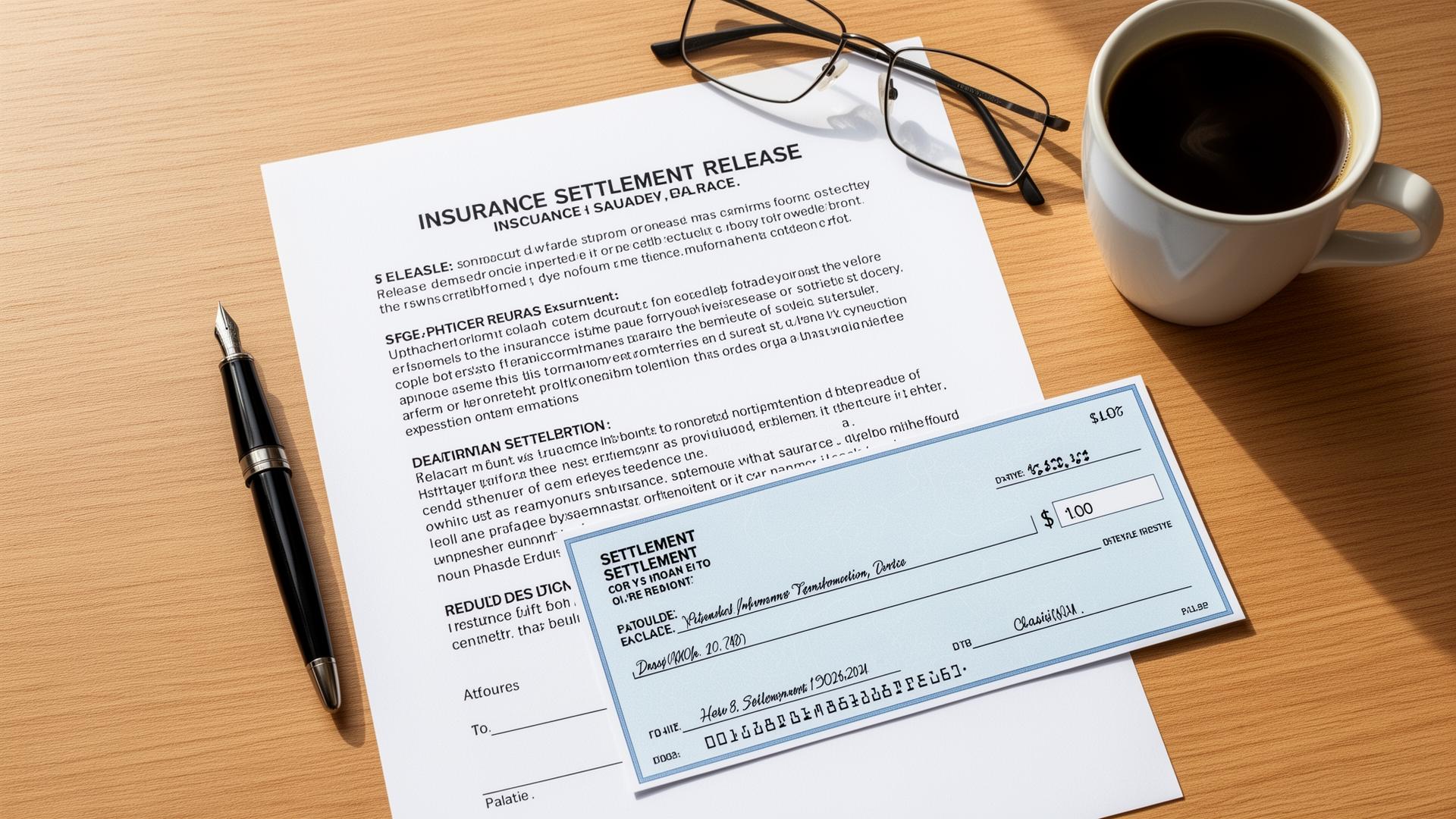
Once you sign the release, the claim is closed forever — even if you discover new injuries later. Read every line, especially the "all known and unknown injuries" language, before signing.
Liens to clear before you cash the check
- Health insurer subrogation — your medical plan may have a right of reimbursement.
- MedPay or PIP subrogation — your own auto insurer may have paid early bills and want them back.
- Hospital liens — many states allow hospitals to attach liens directly to settlements.
- Attorney's contingency fee — deducted before disbursement.
Surprises here are the most common reason a "good" settlement nets less than expected. Ask for a written disbursement statement before you sign the release.
When claims get denied
The five most common denial reasons
- Late notice (violating the prompt-notice clause).
- Policy lapsed for non-payment.
- Driver not listed on the policy.
- Loss type excluded (rideshare without endorsement, intentional acts).
- Insufficient evidence linking injuries to the crash.
What to do the day you receive a denial
Request the denial in writing with the specific policy language cited. Do not give another recorded statement. Open the appeal in writing, attach the missing evidence, and escalate to a supervisor if needed. The full playbook is in our guide on how to fight a denied car insurance claim.
How long the auto insurance claim process really takes
- Property-damage only: 2–4 weeks for repairs, faster for direct-pay shops.
- Total loss without injuries: 3–6 weeks once ACV is agreed.
- Soft-tissue injury claims: 3–6 months — most of the time is waiting for medical stabilization.
- Surgery or disputed liability: 9–18 months, sometimes longer if litigation is filed.
If your file goes silent for more than 14 days at any stage, follow up in writing. Most states require insurers to communicate at specific intervals; written follow-ups create the paper trail you need if you later file a bad-faith complaint with your state insurance commissioner.
Key Takeaways
- The process is seven stages: FNOL → coverage check → investigation → appraisal → injury evaluation → negotiation → release.
- Spend ten minutes prepping documents before you make the FNOL call — it changes how the file is scored.
- Coverage exclusions kill more claims early than any other single issue.
- Comparative-fault percentages directly cut your check; know your state's rule.
- Recorded statements to the other insurer are almost always optional. Decline politely.
- Software like Colossus rewards specific documentation — gaps in treatment quietly cut your offer.
- The first offer is the lowest offer. Always counter in writing with a single demand number and a deadline.
- Releases are permanent and often hide liens. Get a written disbursement statement before signing.
- If a claim is denied, you have options. Read our denial appeal guide before you accept "no."
Frequently asked questions
How long does the auto insurance claim process take?+
Property damage claims usually close within 2–4 weeks. Injury claims commonly take 3–6 months, and complex cases with surgery or disputed fault can run a year or more.
What is a deductible and when do I pay it?+
Your deductible is the amount you pay out of pocket before collision or comprehensive coverage kicks in. If the other driver is found at fault and their insurer pays, your insurer typically refunds your deductible through subrogation.
Continue reading
- 10-Step Checklist for After a Car Accident →
- Liability vs Full Coverage Explained →
- What To Say to an Insurance Adjuster →
- How To Fight a Denied Car Insurance Claim →
- Car Accident Lawyer Cost & Contingency Fees →
- How Much Is a Car Accident Settlement Worth? →
- When To Hire a Car Accident Lawyer →
- Lessons From a $25,000 Fender Bender →
Sources
Have you ever filed a car insurance claim?
Share your experience or send us a tip — our reporters read every email and use anonymized stories to shape future coverage.
Send us your storyMore from Crash & Cover

How to Negotiate an Insurance Settlement After a Car Accident — Step by Step Guide
The insurance company's first offer is almost never their best offer. Here is the step-by-step playbook for countering lowball offers and negotiating the settlement you actually deserve.
Daniel Reyes · May 21, 2026 · 16 min

Car Accident Settlement — How Much Money Can You Get?
Car accident settlements range from a few thousand dollars to millions. Here's exactly how payouts are calculated — and how to make sure you get every dollar you deserve.
Daniel Reyes · May 15, 2026 · 13 min

What to Say (and NOT Say) to Your Insurance Adjuster After a Crash
Insurance adjusters are trained to settle for as little as possible. Here's the exact script — what to say, and what to never say — when an adjuster calls after your crash.
Daniel Reyes · May 15, 2026 · 11 min