Car Accident Claims
How to File a Car Insurance Claim — Everything You Need to Know
Filing a car insurance claim sounds simple until the questions start. This complete guide walks you through every step — from first call to final check — so you keep control of the process and the payout.
By Maya Doroshenko · May 14, 2026 · 12 min read

Knowing how to file a car insurance claim — and how to file it well — can be worth thousands of dollars. The actual paperwork is straightforward. The judgment calls around it (when to call, what to say, when to push back, when to accept) are where most drivers lose money. This guide walks through the entire insurance claim process from the first phone call to the final settlement check, with the practical detail US drivers actually need.
Before you start, make sure you have completed the steps in our companion guide on what to do immediately after a car accident. The two articles are designed to be read back-to-back.
Key takeaways
- File with your own insurer the same day — "prompt notice" is a contract requirement, not a suggestion.
- Open a claim with the at-fault driver's insurer separately if injuries or major damage are involved.
- Decline recorded statements about injuries until you have seen a doctor.
- Get at least one independent body-shop estimate before agreeing to the insurer's number.
- Never sign a final release until medical treatment is complete and diminished value is settled.
- Keep a written log of every call, claim number, adjuster name, and date.
Before you call: the 5-minute prep that improves every claim
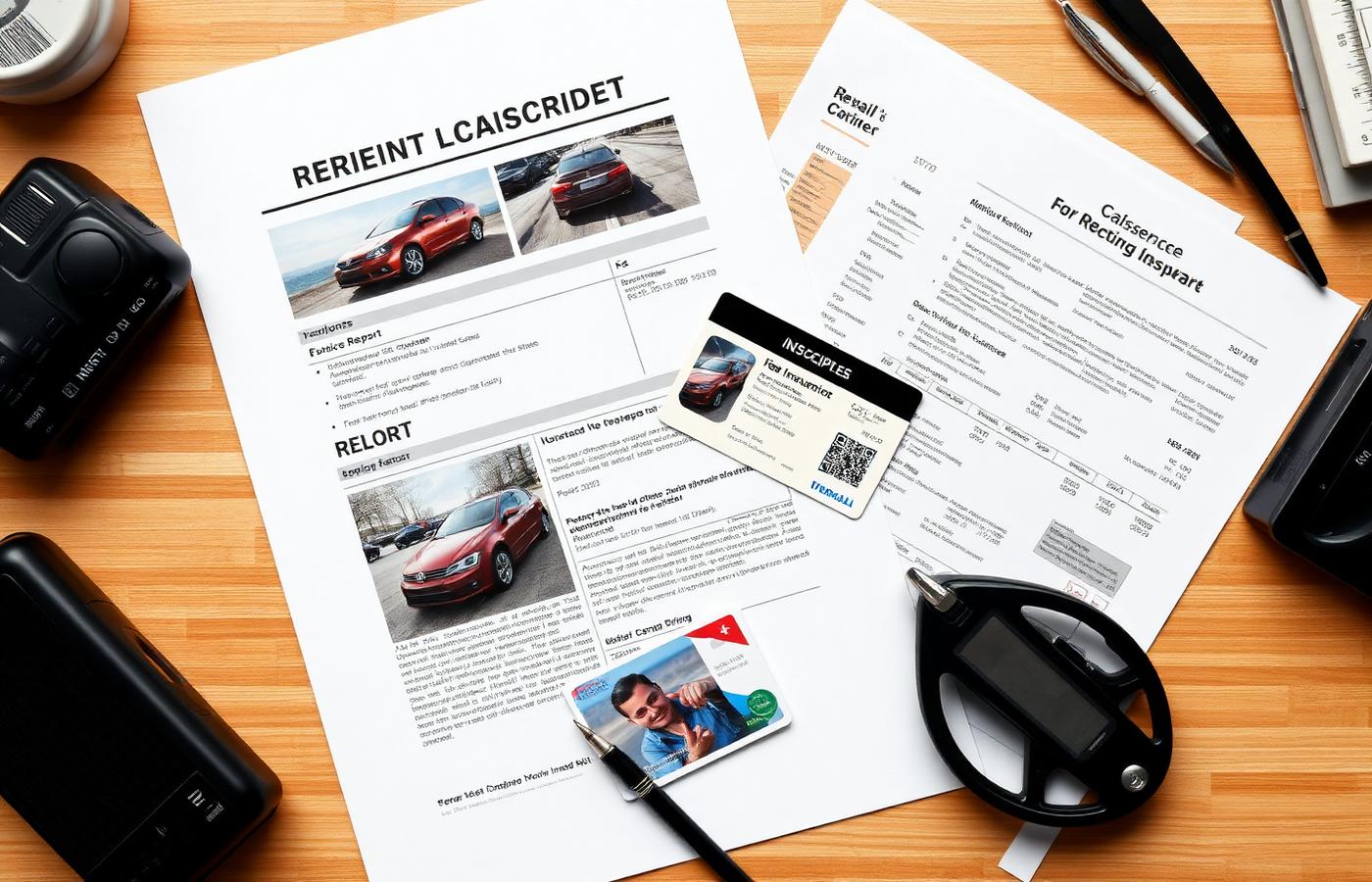
Spend five minutes gathering paperwork before you dial. The cleaner your first call, the faster and higher your eventual payout. You will need:
- Your own policy number and the declarations page (in your insurer's app).
- Date, time, and exact location of the crash.
- The other driver's name, license, plate, insurer, and policy number.
- Police report number and the responding officer's name and badge.
- Your photos, dashcam clips, and any witness contact details.
- A written one-paragraph narrative of what happened, in your own words.
Step 1: Decide which insurer to call first
This is the first big judgment call in the insurance claim process, and it depends on what kind of state you live in.
If you are at fault (or fault is unclear)
Call your own insurer first. Your liability coverage will pay the other party, and your collision coverage (if you have it) will pay for your own vehicle minus the deductible.
If the other driver is clearly at fault
You generally have two paths: file a "first-party" claim with your own insurer (faster, but you pay your deductible and chase reimbursement later), or file a "third-party" claim directly with the at-fault driver's insurer (slower, but no deductible). Many drivers do both — open with their own carrier for speed, then let the carriers handle subrogation.
If you live in a no-fault state
States like Florida, Michigan, New York, New Jersey, and several others require you to file medical claims under your own Personal Injury Protection (PIP) coverage regardless of fault. Property damage claims still follow normal fault rules.
Step 2: Make the first call
Most US insurers now let you open a claim through their app, but a phone call (or video call) is still the fastest way to get a claim number and an assigned adjuster on the same day. When you call:
- Stick to verifiable facts: where, when, who, what was visibly damaged.
- Provide the police report number and your photos.
- Do not speculate about fault, speeds, or whose light was green.
- Do not estimate dollar amounts — that is the adjuster's job.
- Do not agree to a recorded statement about injuries on the same call.
Write down the claim number, the adjuster's full name and direct line, and the exact time of the call. From here on, every conversation goes into a written log.
Step 3: Understand who is doing what
Your adjuster
The claims adjuster is the insurer's employee assigned to your file. They are courteous, often genuinely helpful — and they are paid to close claims at the lowest defensible number. That is not a moral failing; it is the job.
The appraiser
An appraiser inspects the vehicle (in person or via uploaded photos) and writes the repair estimate. In 2026, appraisals for cosmetic damage are increasingly handled by AI computer-vision systems. For anything beyond a clean bumper scrape, push for a human inspection.
The body shop
You almost always have the legal right to choose your own repair shop in the US, regardless of which "preferred network" the insurer recommends. A direct-repair-program shop is faster and includes a workmanship warranty backed by the insurer; an independent shop you trust may catch damage the network shop misses.
Step 4: Get an independent estimate (or two)
This is the single most powerful filing auto insurance claim tip in this guide. Before you agree to the insurer's repair number, walk into one or two independent body shops and ask for a written estimate "for insurance purposes." Most shops do this for free.
You are not bound by the independent estimate, and the insurer is not bound by it either. But it gives you a documented second opinion to point at when the carrier's number is low — and it is what triggers a "supplement" (a revised, higher estimate) in most disputed claims.

Step 5: Handle the medical side carefully
If you were injured — even mildly — the medical portion of the claim is where most of the money is, and where the most mistakes are made. Three rules:
- See a doctor within 72 hours, even if you feel fine. Soft-tissue injuries from rear-end collisions typically surface 24–72 hours later.
- Do not give a recorded statement about injuries until you have a diagnosis. "I'm doing okay" on day one becomes "the claimant denied injury" in the file.
- Do not sign a medical authorization from the other driver's insurer. They will use it to pull years of unrelated records and argue your symptoms are pre-existing.
Keep every medical bill, prescription receipt, and mileage log to and from appointments. These are reimbursable, but only with documentation.
Step 6: Repair, total loss, or salvage?
Repair
If the cost of repair is below the insurer's "total loss threshold" (typically 70–80% of the vehicle's actual cash value, depending on state), the carrier will pay to fix it.
Total loss
If repair cost exceeds the threshold, the insurer "totals" the vehicle and pays its actual cash value (ACV) minus your deductible. ACV is calculated using regional comparable sales — and it is almost always negotiable. Pull listings of comparable vehicles in your zip code with similar mileage and trim, and submit them as evidence for a higher ACV. Drivers who do this typically recover 5–15% more than the first offer.
Diminished value
Even a perfectly repaired vehicle loses resale value once a crash is reported on its history. Diminished value claims are recognized in most states (Georgia is the most generous, several states are silent or restrictive). They are almost never offered by default — you have to ask, and you usually need a third-party diminished value appraisal to support the number. For a deeper breakdown, see our explainer on liability vs full coverage.
Step 7: Negotiating the offer
Insurance settlements are negotiations, not take-it-or-leave-it numbers. Once the adjuster sends a written offer:
- Read it carefully. Confirm the offer covers vehicle repair (or ACV), medical bills incurred, lost wages, and — when applicable — diminished value and pain and suffering.
- Compare it to your documentation. If the offer is below your independent body-shop estimate or your verified medical bills, write a counter.
- Counter in writing, with attached evidence. "Per the attached estimate from [shop name] dated [date], I am requesting $X for repair, plus $Y in documented medical bills, plus $Z for diminished value, for a total of $T."
- Expect a counter-counter. Most claims settle in two to three rounds.
- Never sign the release until you are sure medical treatment is complete and you are satisfied with the number — the release ends the claim permanently.
Step 8: When to escalate
If the adjuster will not move and you believe the offer is unreasonable, you have several escalation paths:
- Ask for a supervisor. Politely and in writing.
- Request appraisal. Most US auto policies include an "appraisal clause" — either party can demand a binding appraisal by independent appraisers if the parties cannot agree on the amount of loss.
- File a complaint with your state's Department of Insurance. Insurers track DOI complaints carefully; a well-written, factual complaint frequently produces a revised offer within 2–3 weeks.
- Hire a personal injury attorney. For injury claims above roughly $10,000, the typical settlement uplift more than covers the contingency fee. Read our guide on when to hire a car accident lawyer before you sign with anyone.
Step 9: Subrogation and your deductible
If you paid a deductible because you filed under your own collision coverage but the other driver was at fault, your insurer will "subrogate" — recover money from the at-fault carrier — and refund your deductible (in full or in part) once they collect. Subrogation can take weeks to months. Set a calendar reminder for 90 days out and follow up if you have not heard back.
Step 10: Close the file the right way
Before you sign the final release, confirm:
- All repair work has been completed and you are satisfied with workmanship.
- All medical treatment is complete (or you have a written reservation for future care).
- Diminished value, lost wages, and out-of-pocket expenses are included.
- You have the final settlement breakdown in writing.
- You have a copy of every document submitted and received.
Once you sign, the claim is closed permanently. There is no reopening it because a symptom returned six months later.
Common mistakes that lower your payout
Filing late
Every day you wait makes the carrier's job easier and your evidence weaker. File the same day.
Talking to the other driver's insurer too soon
You are not legally required to give a recorded statement to the other party's carrier. Politely refer them to your own adjuster.
Accepting the first offer
First offers are anchored low. The drivers who accept day-one offers leave the most money on the table — every published consumer-advocate analysis confirms this.
Repairing before inspection
Once the vehicle is fixed, the evidence of the original damage is gone. Always wait for inspection authorization in writing.
Posting on social media
Adjusters routinely review public social profiles. A weekend hike photo posted while you are claiming a back injury is a settlement-killer.
Insurance claim tips for special situations
Hit-and-run claims
File a police report within 24 hours. Open a claim under your uninsured motorist coverage. Provide every detail you noted at the scene — even a partial plate matters.
Uninsured or underinsured at-fault driver
Open a claim under your UM/UIM coverage. The process mirrors a third-party claim, but you are negotiating with your own carrier — which means an internal complaint can also escalate to your state DOI.
Rideshare and commercial vehicle crashes
The commercial policy applies during active rides or commercial use. Get the company name, vehicle number, driver name, and a screenshot of the trip receipt. Notify both your personal carrier and the commercial carrier.
Multi-vehicle pile-ups
Fault is often apportioned across multiple drivers. Open a claim with your own carrier first and let them coordinate.
How long should a claim take?
Most US states impose statutory deadlines on insurers — typically 15 days to acknowledge a claim, 30–40 days to investigate, and 30 days to pay or deny once liability is accepted. Cosmetic-only claims processed by AI can close in days. Injury claims routinely take 3–9 months. Total losses average 30–45 days. If your claim is dragging without a written reason, send a written status request and reference your state's prompt-pay statute.
Authoritative sources worth bookmarking
Consumer-side guidance on the insurance claim process is published by the National Association of Insurance Commissioners (NAIC), the Insurance Information Institute, and the Consumer Financial Protection Bureau. Each one publishes free, plain-English explainers and complaint pathways.
Filing a car insurance claim: the short version
- Notify your insurer the same day.
- Stick to facts; never admit fault or estimate dollar amounts.
- Get at least one independent body-shop estimate.
- See a doctor within 72 hours and document everything.
- Decline recorded statements and medical authorizations from the other carrier.
- Negotiate in writing with attached evidence.
- Escalate via supervisor, appraisal clause, or DOI complaint when needed.
- Confirm everything is included before signing the final release.
Final word: claims are negotiations, not paperwork
The biggest mental shift drivers need to make is this: filing auto insurance claim isn't a form. It is a negotiation with a counterparty whose entire business model is statistical. They have the data; you have the documentation. Bring documentation to every conversation, decline to speculate, never sign a release until you are sure, and you will routinely outperform the first offer by a meaningful margin.
Ready to put this into action? Start with our step-by-step companion piece on what to do immediately after a car accident, then come back to this guide for the claim itself. Bookmark both, and you will never have to think about the process again — you will just follow it.
Frequently asked questions
How soon should I file a car insurance claim after an accident?+
The same day if at all possible. Almost every US auto policy contains a 'prompt notice' clause, and waiting can give the insurer grounds to reduce or deny the claim. File within 24 hours even if you are still gathering documents.
Should I file a claim with my own insurer or the other driver's?+
If the other driver is clearly at fault and damages are minor, a third-party claim with their insurer avoids your deductible. For anything serious — injuries, disputed fault, or major damage — open a claim with your own insurer first for speed, and let the carriers handle subrogation.
Can I negotiate the settlement offer my adjuster sends me?+
Yes. Insurance settlement offers are opening positions, not final numbers. Counter in writing with documented evidence — independent body-shop estimates, medical bills, comparable vehicle listings — and most claims settle in two to three rounds.
Does filing a car insurance claim raise my premium?+
It can, especially for at-fault claims, but not always. Not-at-fault claims, glass-only claims, and comprehensive claims (theft, weather) often have little or no premium impact. Ask your insurer for a written estimate of any rate change before deciding whether to file a small claim out-of-pocket.
Continue reading
Sources
Have you ever filed a car insurance claim?
Share your experience or send us a tip — our reporters read every email and use anonymized stories to shape future coverage.
Send us your storyMore from Crash & Cover

How to Negotiate an Insurance Settlement After a Car Accident — Step by Step Guide
The insurance company's first offer is almost never their best offer. Here is the step-by-step playbook for countering lowball offers and negotiating the settlement you actually deserve.
Daniel Reyes · May 21, 2026 · 16 min

Car Accident Settlement — How Much Money Can You Get?
Car accident settlements range from a few thousand dollars to millions. Here's exactly how payouts are calculated — and how to make sure you get every dollar you deserve.
Daniel Reyes · May 15, 2026 · 13 min

What to Say (and NOT Say) to Your Insurance Adjuster After a Crash
Insurance adjusters are trained to settle for as little as possible. Here's the exact script — what to say, and what to never say — when an adjuster calls after your crash.
Daniel Reyes · May 15, 2026 · 11 min