Insurance News & Updates
Why Auto Insurance Rates Are Up Again in 2026 — And What Drivers Can Do
Auto premiums climbed again in 2026. Here is what is really pushing them up — and four moves you can make before your next renewal.
By Daniel Reyes · May 10, 2026 · 11 min read

Personal auto insurance premiums in the U.S. rose another high single-digit percentage in early 2026, on top of double-digit increases in 2023 and 2024. The drivers behind the hikes are structural, not temporary — and for most households, the auto policy is now the second- or third-largest recurring bill after rent and groceries. This guide breaks down what is pushing rates higher, where the worst hikes are landing, how different drivers are affected, and the concrete moves that actually move the needle at renewal.
Why premiums keep climbing
1. Repair costs
Modern vehicles are rolling computers. A bumper today carries radar, cameras, and ultrasonic sensors that must be recalibrated after a minor scrape. Average repair severity has climbed more than 40% since 2019. A windshield replacement on a car with a forward-facing camera now runs $1,200–$1,800 once recalibration is included — triple what the same job cost a decade ago.
2. EV claims
Battery packs make total-loss thresholds easier to hit. Even a moderate underbody hit can write off an EV. Insurers price that risk into every EV policy. The shortage of certified EV technicians also extends rental-car days during repair, which insurers pass through as higher loss-adjustment expense.
3. Litigation and settlements
So-called "social inflation" — larger jury awards and aggressive plaintiff strategies — has pushed bodily injury severity higher every year for a decade. Median verdicts in auto injury cases crossed $125,000 in 2025, more than double the 2015 figure when adjusted for inflation.
4. Severe weather
Hail, flooding, and wildfires drove record comprehensive losses in 2024 and 2025. Carriers are repricing in nearly every state with high-frequency events. Comprehensive premiums alone are up 28% over two years in hail-prone corridors from Texas through the Dakotas.
5. Higher reinsurance costs
Insurers buy insurance too. Global reinsurance prices reset upward sharply in 2023–2025, and those wholesale costs flow directly into retail premiums. Smaller regional carriers were hit hardest — several exited the personal auto market entirely, shrinking competition in the states where consumers needed it most.

Which states have the highest rate hikes in 2026
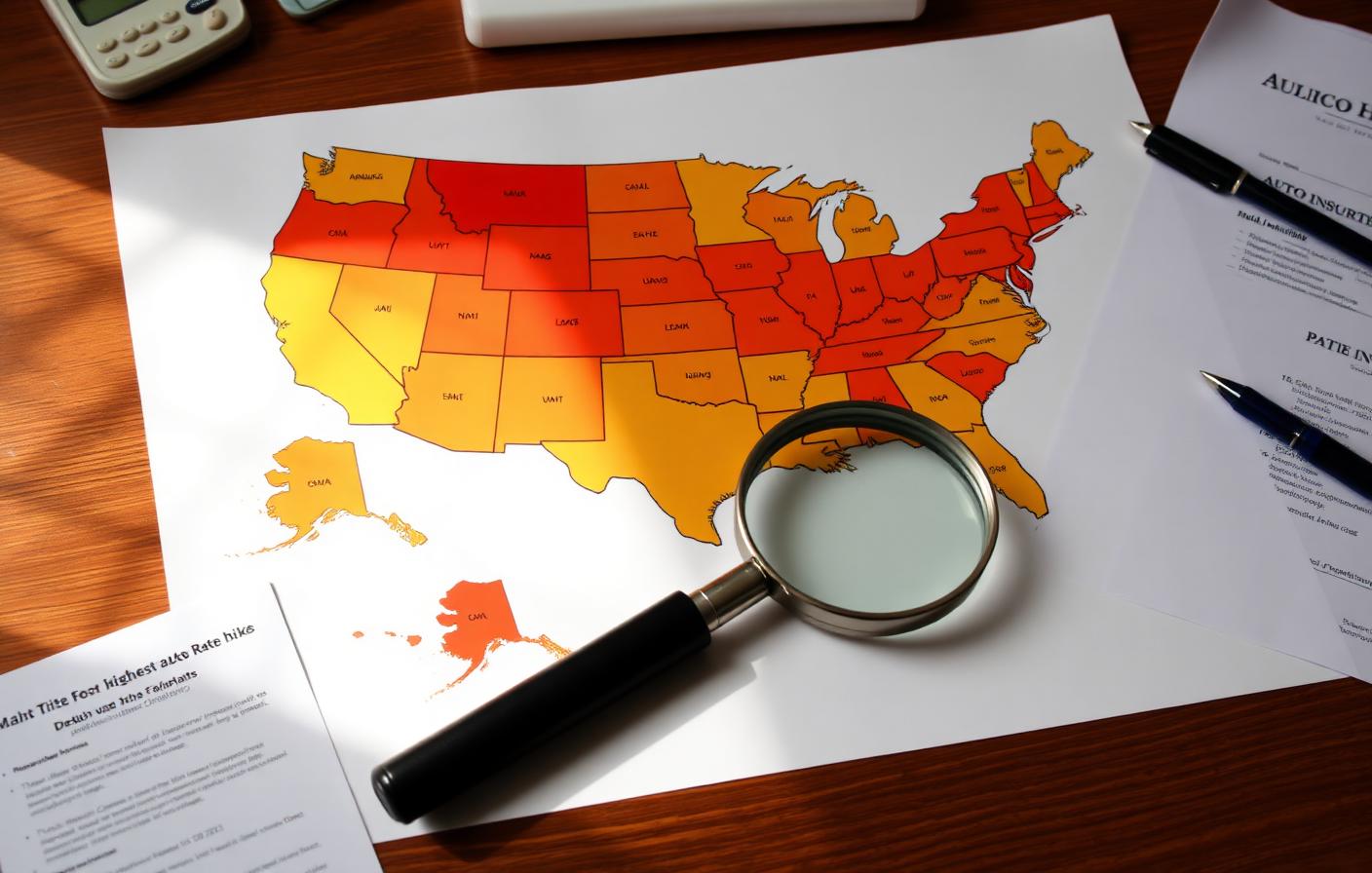
Rate increases are not evenly distributed. State insurance departments approve filings on a rolling basis, and a handful of markets are bearing the brunt of 2026's increases. The pattern follows three drivers: severe weather exposure, litigation environment, and uninsured-motorist rates.
The top hike markets
- Florida — Hurricane exposure plus one of the most active plaintiff bars in the country. Average renewals up 18–24% year over year.
- Louisiana — Hurricane, flood, and a high uninsured-motorist rate combine for some of the highest absolute premiums in the U.S.
- California — A multi-year freeze on filings broke in 2024; carriers are now catching up with double-digit approvals.
- Texas — Hail belt repricing plus heavy population growth in metro areas pushing claim frequency higher.
- Colorado and Nebraska — The hail and severe-storm corridor; comprehensive coverage drives the entire premium higher.
- New York and New Jersey — High-density urban claims plus aggressive litigation environments.
The quieter markets
Not every driver is being hammered. Maine, Vermont, New Hampshire, Idaho, and Wisconsin continue to post some of the lowest average premiums in the country, with single-digit increases in 2026. Low population density, low litigation activity, and limited catastrophe exposure keep the loss ratio manageable.
How rate hikes affect different driver profiles
The headline percentage hides huge variation by who you are and what you drive.
Young drivers (under 25)
Already the highest-rated segment, young drivers are seeing the largest absolute dollar increases — often $400–$900 more per year on a single vehicle. The structural fix is the same as it has always been: stay on a parent's policy when eligible, complete a defensive-driving course, and lock in the good-student discount with a 3.0 GPA. See our discount guide for the full list.
Senior drivers (65+)
Mature drivers with clean records often see smaller increases — but only if they actively claim the mature-driver and low-mileage discounts. Carriers do not apply these automatically when you cross an age threshold; you have to ask.
EV and hybrid owners
EVs cost 15–25% more to insure on average. Tesla, Rivian, and Lucid models cost the most because of repair-network scarcity and battery-replacement severity. Hybrids generally fall closer to gas-vehicle pricing.
High-mileage commuters
Mileage tiers reset every renewal. Drivers who returned to a long daily commute after 2020's low-mileage years are being repriced into higher exposure brackets, sometimes adding $200–$500 per year.
Drivers with a recent claim or violation
A single at-fault accident now stays on rating for 3–5 years in most states and adds 30–50% to the premium during that window. A DUI can double the premium and require an SR-22 filing.
What to do if you cannot afford your premium
If a renewal notice just landed and the new number is unworkable, you have more options than the bill suggests. In order of impact:
1. Shop the entire market before you cancel anything
Premiums vary by $1,000+ per year for the exact same driver between carriers. Get quotes from at least three direct writers (GEICO, Progressive, State Farm) and at least one independent broker who quotes regional carriers.
2. Restructure your coverage instead of dropping it
Raising your deductible from $500 to $1,000 typically saves 10–15%. Dropping rental reimbursement and roadside assistance saves a smaller but immediate amount. See our deductibles guide before adjusting.
3. Drop collision on older vehicles
The rule of thumb: when annual premiums for collision plus comprehensive exceed 10% of your vehicle's market value, the math stops working. Switching to liability-only is a legitimate choice — read our liability vs. full coverage comparison first so you understand exactly what you are giving up.
4. Ask about pay-in-full and paperless discounts
Paying the full six-month premium up front usually saves 5–8% versus monthly installments. Paperless billing and autopay each shave another 1–3%.
5. Enroll in telematics — if you actually drive calmly
Good telematics scores save 10–30%. Bad ones can raise your rate at the next renewal. Only enroll if your honest assessment of your driving says you brake smoothly and stay off the phone.
6. State assistance and non-standard markets
Several states (California, Hawaii, New Jersey) have low-cost auto insurance programs for low-income drivers. They provide minimum liability at a regulated price. They are not perfect, but they keep you legal while you stabilize.
How to compare insurance quotes effectively
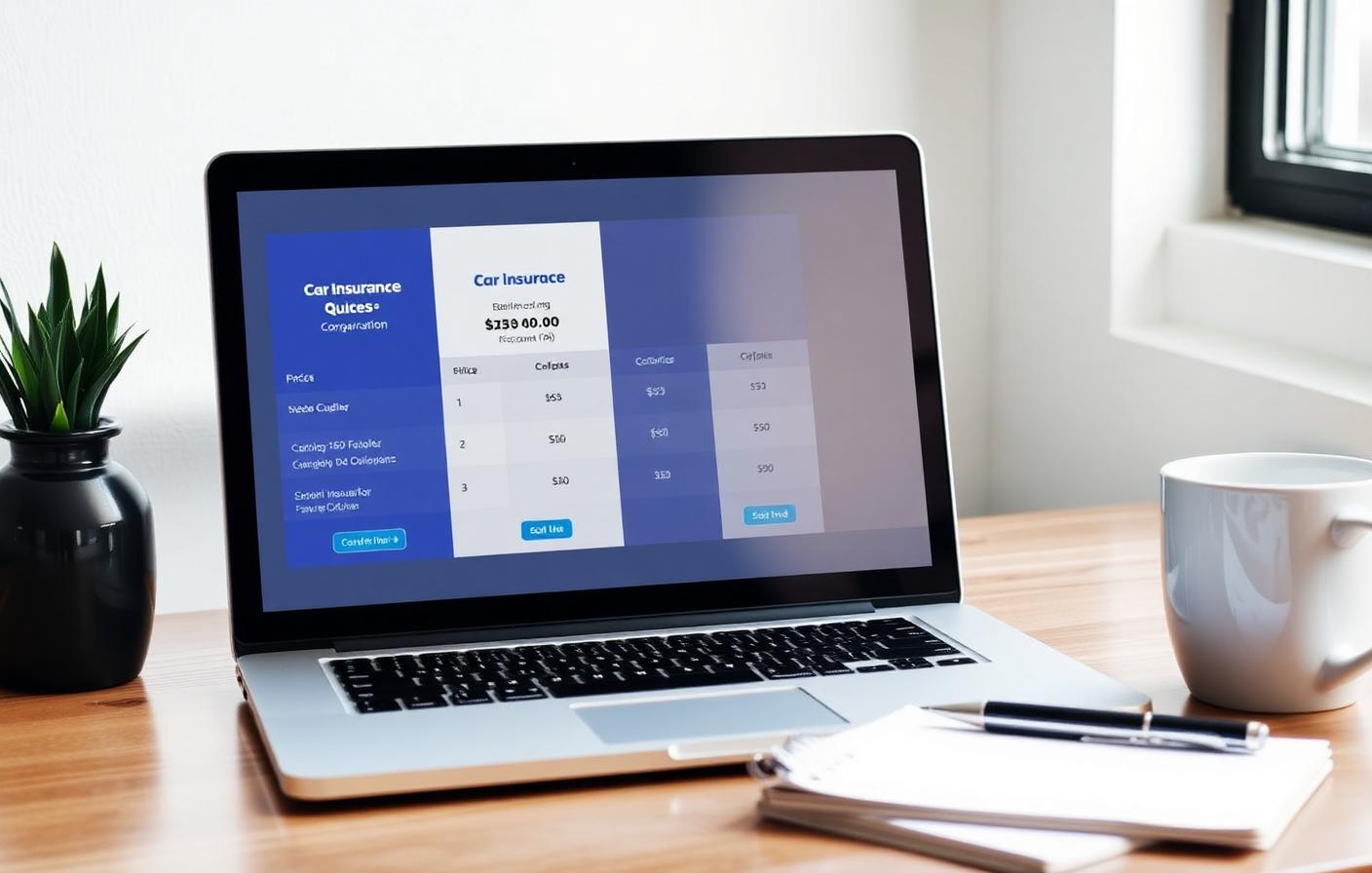
Comparison shopping only works if you are comparing the same thing. Drivers routinely get a "cheaper" quote that turns out to have lower limits, a higher deductible, or missing coverages — and the savings evaporate the first time a claim hits.
The apples-to-apples checklist
- Identical bodily injury and property damage liability limits (for example 100/300/100).
- Identical uninsured/underinsured motorist limits — and the same election to include or reject it.
- Identical collision and comprehensive deductibles.
- Same medical payments / personal injury protection limits.
- Same add-ons: rental, roadside, gap insurance, OEM-parts endorsement, accident forgiveness.
- Same payment cadence (six-month paid in full vs. monthly).
Where to get quotes
- Two or three direct writers for baseline pricing — usually the cheapest if your profile is clean.
- One independent agent who can quote regional and non-admitted carriers you cannot reach online.
- One online aggregator as a sanity check — but verify each quote directly with the carrier before binding.
Red flags in a quote
Watch for state-minimum liability defaults when you asked for 100/300, a six-month premium displayed as if it were annual, missing uninsured-motorist coverage, and "introductory" rates that reset after the first renewal.
When to switch insurance companies
Switching is almost always allowed — auto policies are not annual contracts in the way many drivers assume. You can cancel mid-term and the old carrier will refund the unused premium pro-rata. The question is when it actually pays off.
Strong reasons to switch
- A competing quote is at least 15% cheaper for identical coverage.
- Your current carrier mishandled a recent claim — slow payment, denied legitimate items, or a forced shop.
- You added a teen driver and your current carrier penalizes that more harshly than competitors.
- You moved to a new state or ZIP code and the existing carrier is uncompetitive there.
- You bought an EV and your insurer does not specialize in EV repair networks.
Reasons to stay
- Accident forgiveness you earned through tenure that resets to zero with a new carrier.
- A bundled home + auto discount that disappears if you split the policies.
- Membership benefits (USAA, certain credit unions) that competitors cannot match.
- You have an open claim — finish it before switching to avoid finger-pointing.
The clean-switch checklist
- Bind the new policy with a start date matching the old policy's cancellation date — never have a gap, even one day.
- Cancel the old policy in writing and request the cancellation confirmation.
- Notify your lienholder of the new policy details.
- Update autopay so the old carrier does not pull one more cycle.
- Save your new ID cards to your phone before driving.
Four moves before your next renewal
- Re-shop with at least three carriers. Loyalty rarely pays in this market.
- Raise your deductible from $500 to $1,000 if you can self-insure the difference. Common 10–15% premium drop.
- Try a telematics program if you are a calm, low-mileage driver — see our discount guide.
- Reassess collision on older vehicles. When premiums exceed 10% of vehicle value, dropping collision often makes sense.
Key Takeaways
- 2026 rate hikes are structural — repair tech, EV severity, litigation, weather, and reinsurance — not a temporary spike.
- Florida, Louisiana, California, Texas, Colorado, New York, and New Jersey are absorbing the steepest increases.
- Young drivers and EV owners are seeing the largest absolute dollar increases.
- A 15% gap between your current premium and a competing quote is the rule-of-thumb threshold for switching.
- Always compare quotes with identical limits, deductibles, and add-ons — not just the monthly price.
- Raising the deductible, dropping collision on old vehicles, and stacking pay-in-full + paperless + telematics discounts are the highest-leverage moves.
- Never let coverage lapse — even a one-day gap pushes you into a non-standard rating tier at the next renewal.
- Treat your auto policy like a subscription you re-evaluate every 12–24 months.
The outlook
Industry analysts at the Insurance Information Institute expect the rate of increase to slow in late 2026 as carriers return to underwriting profitability — but a return to pre-2022 pricing is unlikely. The smart move for drivers: treat your auto policy like a subscription you re-evaluate every 12–24 months.
Frequently asked questions
Are auto insurance rates expected to drop in 2026?+
Most analysts expect the pace of increases to slow, not reverse. Premiums are unlikely to return to pre-2022 levels.
Does owning an EV always cost more to insure?+
Often, yes — by 15–25% on average — driven by higher repair and total-loss costs. The gap is shrinking as more shops are certified for EV repair.
How often should I shop my auto insurance?+
Every 12 months at minimum, and immediately after any life change — moving, marriage, adding a driver, buying a new vehicle, or a claim falling off your record. Loyalty discounts rarely beat a fresh market quote.
Will switching insurance companies hurt my credit or record?+
No. Switching carriers does not affect your driving record and does not produce a hard credit inquiry in most states. A short coverage lapse, however, will raise your next premium — bind the new policy before cancelling the old one.
Continue reading
Sources
Have you ever filed a car insurance claim?
Share your experience or send us a tip — our reporters read every email and use anonymized stories to shape future coverage.
Send us your storyMore from Crash & Cover

AI Adjusters Are Now Settling Your Car Accident Claim in Minutes — Here's What That Means for Your Payout
From dashcam uploads to instant payout offers, AI adjusters are rewriting the car accident insurance claim process in 2026. Here is what is changing — and the three places algorithms are quietly costing drivers money.
Maya Doroshenko · May 13, 2026 · 8 min

How to Negotiate an Insurance Settlement After a Car Accident — Step by Step Guide
The insurance company's first offer is almost never their best offer. Here is the step-by-step playbook for countering lowball offers and negotiating the settlement you actually deserve.
Daniel Reyes · May 21, 2026 · 16 min

10 Things Every US Driver Should Know About Car Insurance Before an Accident Happens
The time to understand your car insurance is not after an accident. Here are 10 essential things every US driver needs to know before they ever need to file a claim.
Priya Sundaram · May 17, 2026 · 16 min