Auto Insurance Tips
10 Things Every US Driver Should Know About Car Insurance Before an Accident Happens
The time to understand your car insurance is not after an accident. Here are 10 essential things every US driver needs to know before they ever need to file a claim.
By Priya Sundaram · May 17, 2026 · 16 min read

Most Americans spend more time researching their next Netflix subscription than they do understanding their car insurance policy. The average driver renews their policy every six to twelve months, pays the premium, and files the documents away without ever reading what they actually bought.
Then an accident happens.
Suddenly, terms like deductible, liability limits, subrogation, and actual cash value become urgently important — and most drivers are learning what they mean in real time while dealing with damaged vehicles, medical bills, and insurance adjusters.
The time to understand your car insurance is not after an accident. It is right now, while everything is calm and you have the luxury of making informed decisions.
Here are ten essential things every US driver needs to know about car insurance before they ever need to use it.
1. Your State Minimum Coverage Is Almost Never Enough
Every US state requires drivers to carry a minimum amount of liability insurance. These minimums exist to ensure that drivers can cover basic damages they cause to others. What they do not do is provide adequate protection in a serious accident.
Consider the reality of modern accident costs. A serious injury accident can easily generate $100,000 or more in medical bills for the injured party. A multi-vehicle accident can involve hundreds of thousands of dollars in property damage and injury claims. If you only carry state minimum liability limits — often as low as $15,000 per person in some states — you are personally responsible for every dollar above those limits.
That means your savings account, your home equity, your wages, and your other assets are all potentially at risk in a serious at-fault accident where your liability limits are exceeded.
The smart move is to carry at least $100,000 per person and $300,000 per accident in bodily injury liability, and at least $100,000 in property damage liability. The additional premium cost is modest — typically $100 to $200 per year more than minimum coverage — and the financial protection is dramatically greater. For a deeper comparison of what different coverage levels mean, see our guide on full coverage vs liability insurance.
2. Your Insurance Follows Your Car, Not You
This surprises many drivers. In most states, your car insurance policy is attached to your vehicle, not to you personally. This means:
- If you lend your car to a friend and they cause an accident, your insurance is the primary coverage — not theirs. Your rates could increase as a result of a claim filed under your policy for an accident you were not even involved in.
- If you drive someone else's car with their permission and cause an accident, their insurance pays first. Your insurance may act as secondary coverage if their limits are insufficient.
This has important practical implications. Be very careful about who you lend your vehicle to, and understand that borrowing someone else's car carries insurance consequences for both parties.
3. Gaps Between Your Policy's Expiration and Renewal Can Be Catastrophic
Many drivers experience a lapse in coverage — a period where their policy has expired but the new policy has not yet taken effect, or where a missed payment caused their coverage to lapse temporarily.
Even a single day without insurance coverage can have serious consequences. If you are involved in an accident during a coverage gap, you have no insurance protection at all. You are personally responsible for all damages and injuries — regardless of fault.
Beyond the immediate financial exposure, a coverage lapse also affects your future insurance rates. Insurers view a lapse in coverage as a risk factor and typically charge higher premiums to drivers who have had gaps — sometimes significantly higher.
Set up automatic payments for your insurance premium to prevent accidental lapses. And if you ever need to switch carriers, make sure the new policy's start date overlaps with — or at minimum connects directly to — the end date of your old policy.
4. What You Say After an Accident Matters Enormously
The words you use at the accident scene and in the days following can significantly affect your insurance claim outcome. Many drivers inadvertently damage their own claims by saying the wrong things in the immediate aftermath of an accident.
Never admit fault at the scene — even if you think you may have contributed to the accident. Fault determination is a complex legal and insurance analysis that takes into account road conditions, traffic laws, vehicle positions, and witness accounts. What seems like your fault in the moment may not be legally or financially.
Never say you feel fine immediately after an accident. Adrenaline masks pain and injury. Many serious injuries — whiplash, soft tissue damage, concussions, and internal injuries — do not produce obvious symptoms until hours or days after the accident.
Never give a recorded statement to the other driver's insurance company without consulting your own insurer or a car accident lawyer first. Recorded statements are used to establish a fixed version of events that can be used against you throughout the claims process.
5. Uninsured and Underinsured Motorist Coverage Is Essential
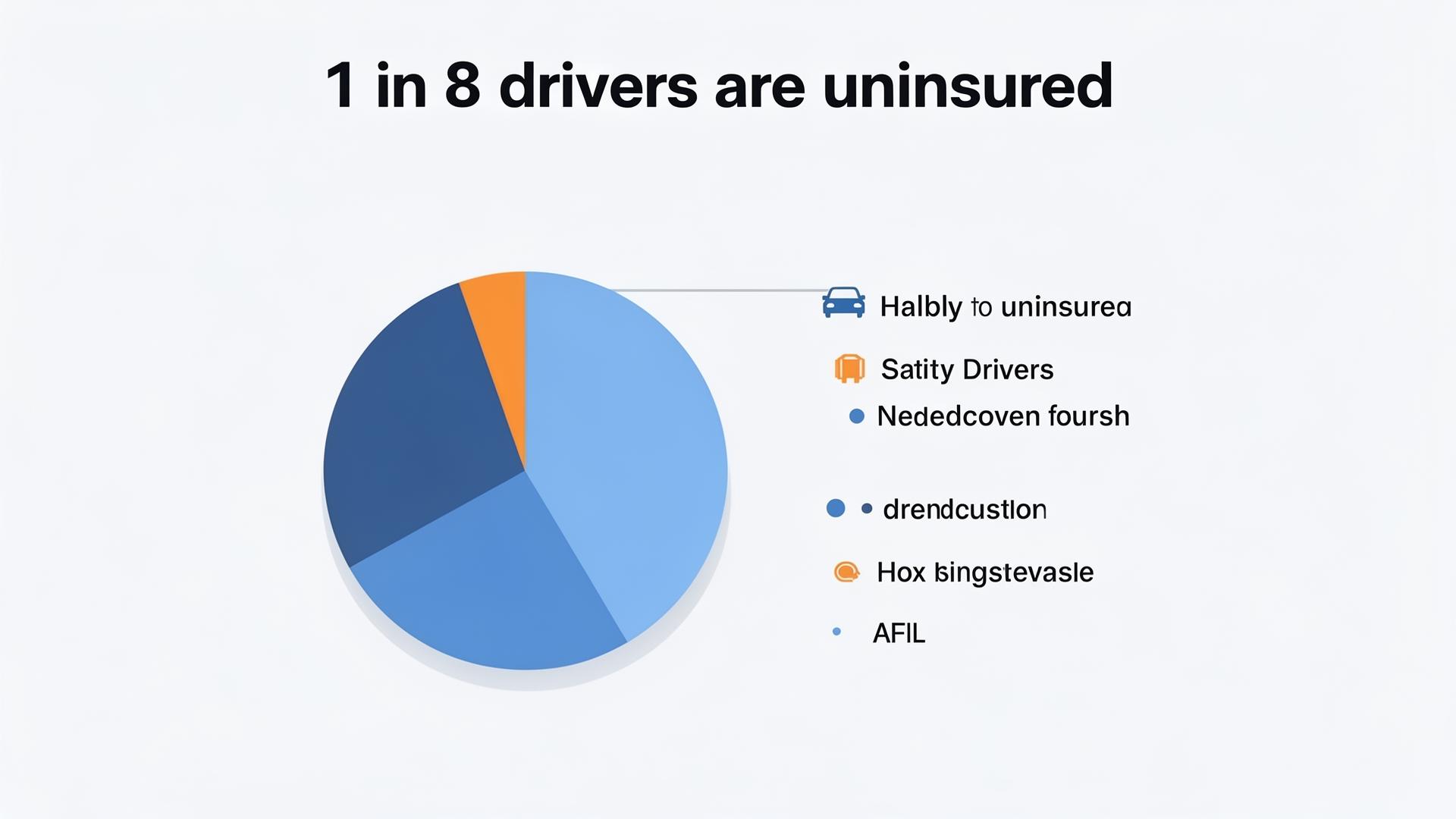
Approximately one in eight US drivers is uninsured at any given time. In some states the rate is significantly higher. Even among insured drivers, many carry only state minimum liability limits that are woefully insufficient for a serious accident.
Uninsured motorist coverage protects you when the at-fault driver has no insurance. Underinsured motorist coverage protects you when the at-fault driver has insurance but their limits are not enough to cover your damages. Together these coverages ensure that your ability to recover compensation is not dependent on the financial responsibility of the driver who hits you.
These coverages are relatively inexpensive — typically $50 to $150 per year to add to your policy — and can make the difference between full financial recovery and financial devastation after a serious accident. Learn more in our dedicated guide to uninsured motorist coverage explained.
6. Your Credit Score Affects Your Insurance Premium in Most States
In most US states, insurance companies are legally permitted to use your credit score as a factor in determining your premium. Studies conducted by insurers have found a statistical correlation between credit scores and claim frequency — drivers with lower credit scores file more claims on average.
The practical implication is significant. Two drivers with identical driving records, vehicles, and coverage levels can pay dramatically different premiums if their credit scores differ substantially.
Improving your credit score over time can meaningfully reduce your insurance premiums. Conversely, a significant drop in your credit score — from a job loss, medical debt, or financial difficulty — can cause your insurance premium to increase at renewal even if your driving record has not changed.
Check whether your state restricts the use of credit in insurance pricing — California, Hawaii, Massachusetts, and Michigan prohibit or significantly restrict this practice.
7. Filing Small Claims Can Cost You More Than Not Filing
This is counterintuitive but financially important. Many drivers file insurance claims for minor damage — small fender benders, parking lot scrapes, minor hail damage — without considering the long-term premium impact.
Insurance companies track your claims history. Filing multiple claims within a short period — even not-at-fault claims in many cases — can result in your insurer categorizing you as a higher-risk customer and increasing your premium at renewal. In some cases they may choose not to renew your policy at all.
The general financial wisdom is to avoid filing claims for damage that costs less than two to three times your deductible. For example, if your deductible is $500 and the repair estimate is $800, paying out of pocket saves you from a potential premium increase that could cost you $200 to $400 per year for several years — far exceeding the $300 you saved on the repair.
Reserve insurance claims for significant damage and serious accidents where the payout justifiably exceeds the long-term premium impact. For more on how deductibles work, read our guide to car insurance deductibles explained.
8. Your Vehicle's Actual Cash Value May Surprise You
If your vehicle is declared a total loss — meaning the cost of repairs exceeds the vehicle's value — your insurance company pays you the actual cash value of your vehicle at the time of the accident, not what you paid for it or what it would cost to replace it.
Actual cash value takes into account depreciation. A vehicle that you purchased new for $28,000 three years ago may have an actual cash value of $16,000 to $18,000 today. If you still owe $20,000 on your car loan, you could find yourself receiving an insurance check for $17,000 while still owing your lender $20,000 — a $3,000 shortfall that you are personally responsible for.
This is precisely the situation that gap insurance is designed to address. Gap insurance covers the difference between your vehicle's actual cash value and your remaining loan or lease balance. If you are financing or leasing a vehicle, gap insurance is one of the most valuable and most overlooked coverages available.

9. You Can and Should Shop Your Insurance Every Year
Insurance companies are not all the same. Premiums for identical coverage can vary by 50% to 100% or more between different insurers for the same driver, vehicle, and location. The company that offered you the best rate three years ago may no longer be competitive today.
Life changes that should trigger an insurance comparison include moving to a new address, getting married or divorced, adding or removing a vehicle, adding or removing a driver from your household, paying off a car loan, turning 25 if you are a young driver, or reaching age 55 if you are an older driver.
Even without a major life change, shopping your insurance every 12 to 24 months is sound financial practice. Loyalty discounts rarely offset the savings available by switching to a more competitive insurer.
When comparing quotes, always compare identical coverage levels — same liability limits, same deductibles, same additional coverages. A lower premium that comes with lower limits or higher deductibles is not necessarily a better deal.
10. An Umbrella Policy Provides Affordable Protection Against Catastrophic Liability
Personal umbrella insurance is one of the most cost-effective and most overlooked insurance products available to US drivers. An umbrella policy provides an additional layer of liability coverage — typically $1 million to $5 million — that kicks in after your auto and homeowners insurance limits are exhausted.
For example, if you cause a serious accident that results in $600,000 in damages and you carry $300,000 in auto liability coverage, your umbrella policy covers the remaining $300,000 — preventing a judgment that could devastate your financial life.
The cost of a $1 million umbrella policy is typically $150 to $300 per year — a remarkably small price for the financial protection it provides. Most insurance companies require you to carry certain minimum liability limits on your auto and homeowners policies before they will issue an umbrella policy, so check with your agent about the requirements.
For anyone with significant assets — a home, retirement savings, investment accounts, or substantial income — a personal umbrella policy is not optional. It is essential.
Key Takeaways
- State minimum liability coverage is almost always insufficient for a serious accident — carry at least $100,000/$300,000
- Your auto insurance follows your vehicle, not you personally
- Even a single day without coverage can expose you to catastrophic financial risk
- What you say after an accident directly affects your claim outcome
- Uninsured and underinsured motorist coverage is essential given that 1 in 8 drivers is uninsured
- Your credit score affects your insurance premium in most US states
- Filing small claims can cost more in premium increases than the claim is worth
- Your vehicle's actual cash value at total loss may be significantly less than you expect
- Shopping your insurance annually can save hundreds of dollars per year
- A personal umbrella policy provides $1 million or more in liability protection for $150 to $300 per year

Conclusion
Car insurance is not just a legal requirement — it is a financial safety net that protects everything you have worked to build. Understanding how it works before you need it is one of the most valuable investments of time you can make as a driver.
Review your current policy against the ten points covered in this guide. Check your liability limits. Confirm you have uninsured motorist coverage. Understand your deductible and actual cash value implications. Shop your coverage annually to ensure you are getting competitive rates.
The drivers who come out of accidents in the strongest financial position are almost always the ones who understood their coverage before the accident happened. Be one of those drivers.
Frequently asked questions
How do I know if my current liability limits are high enough?+
A good rule of thumb is to carry liability limits at least equal to your total net worth — the combined value of your assets minus your debts. If you have $200,000 in assets, carrying $100,000/$300,000 in liability coverage provides a reasonable level of protection. For higher net worth individuals, a personal umbrella policy is strongly recommended.
Does my car insurance cover me when I drive a rental car?+
In most cases your personal auto insurance extends to rental cars for personal use within the US and Canada. Your collision and comprehensive coverage typically applies to the rental vehicle subject to your deductible. However, coverage for loss of use charges — the rental company's lost revenue while the car is being repaired — varies by policy. Check your policy before declining the rental company's collision damage waiver.
What is the difference between an insurance agent and an insurance broker?+
An insurance agent represents one or more specific insurance companies and can only sell their products. An independent insurance broker represents multiple insurers and can shop your coverage across many companies to find the best rate. For most drivers, working with an independent broker provides access to more competitive options than going directly to a single carrier.
How long does a traffic violation affect my insurance rate?+
Most traffic violations affect your insurance premium for three to five years from the date of the violation. Serious violations such as DUI or reckless driving can affect your rates for longer — sometimes up to ten years. The impact varies by insurer and state.
Continue reading
Sources
Have you ever filed a car insurance claim?
Share your experience or send us a tip — our reporters read every email and use anonymized stories to shape future coverage.
Send us your storyMore from Crash & Cover

5 Overlooked Auto Insurance Discounts That Quietly Cut Your Premium 30%
Most drivers never claim the auto insurance discounts they qualify for. These five quietly cut premiums by up to 30%.
Priya Sundaram · May 4, 2026 · 12 min

How to Negotiate an Insurance Settlement After a Car Accident — Step by Step Guide
The insurance company's first offer is almost never their best offer. Here is the step-by-step playbook for countering lowball offers and negotiating the settlement you actually deserve.
Daniel Reyes · May 21, 2026 · 16 min
Full Coverage vs Liability Insurance — Which One Should You Choose?
Full coverage vs liability insurance is one of the most financially significant decisions you make as a driver. Here is what each really covers and how to choose.
Daniel Reyes · May 17, 2026 · 14 min